ordre (moq):
1
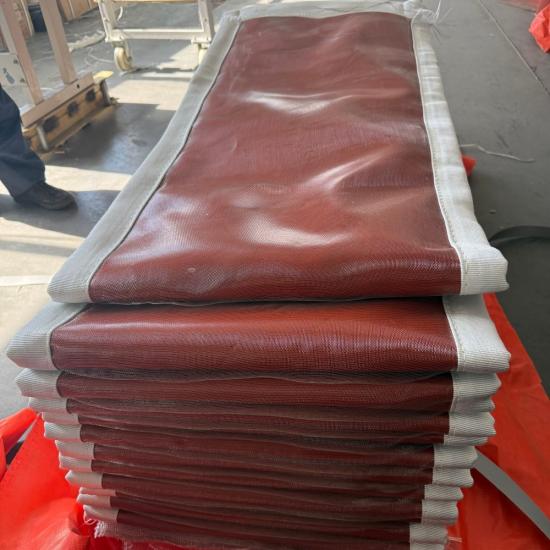
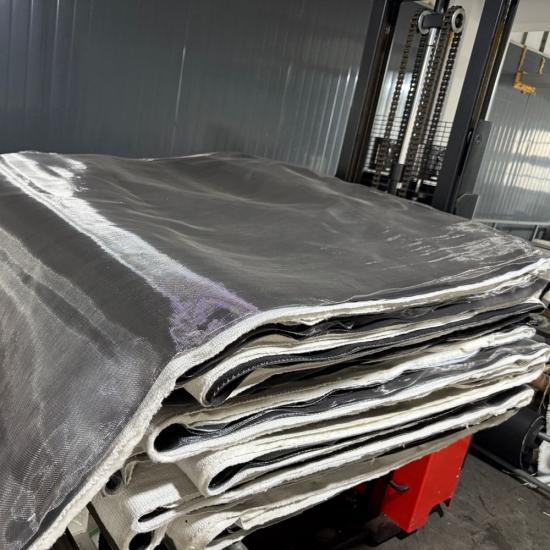
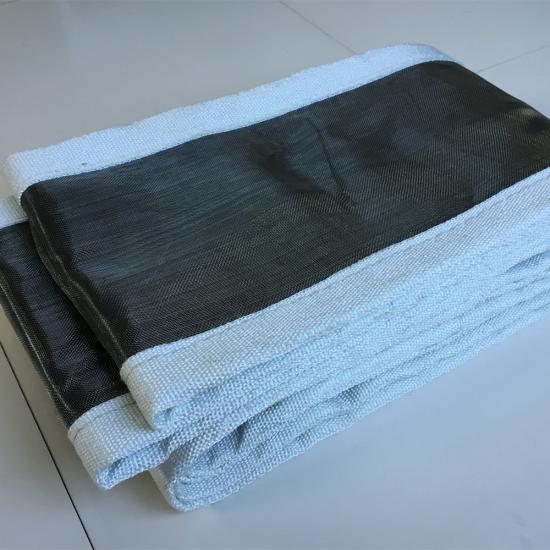
Joint de dilatation en tissu non métallique BSTFLEXIl s'agit d'un connecteur flexible conçu sur mesure pour les systèmes de conduits industriels, d'air chaud, d'échappement et de gaz de combustion où la dilatation thermique, les vibrations, les mouvements d'équipement ou le désalignement de l'installation doivent être pris en compte sans transférer des charges excessives aux conduits et équipements adjacents.
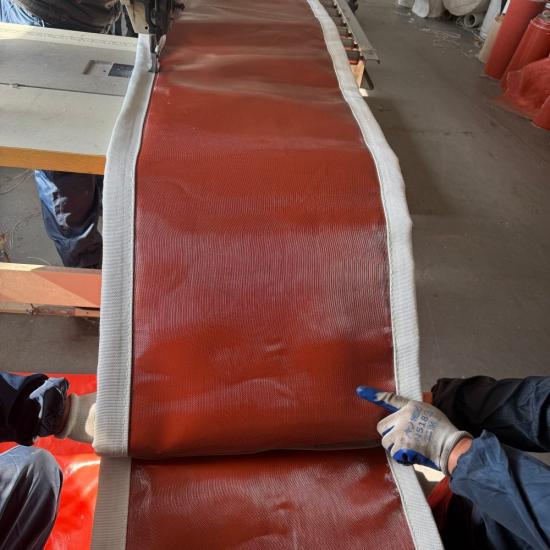
Contrairement aux composants métalliques rigides, unjoint de dilatation en tissuCe système utilise une ou plusieurs couches flexibles en textile, en tissu enduit, d'étanchéité et d'isolation, sélectionnées en fonction de la température de fonctionnement, de la composition du gaz, des conditions de pression, des exigences de mouvement et de l'environnement. L'élément flexible peut absorber les déplacements axiaux, latéraux et angulaires tout en maintenant une liaison contrôlée entre deux sections de conduit.
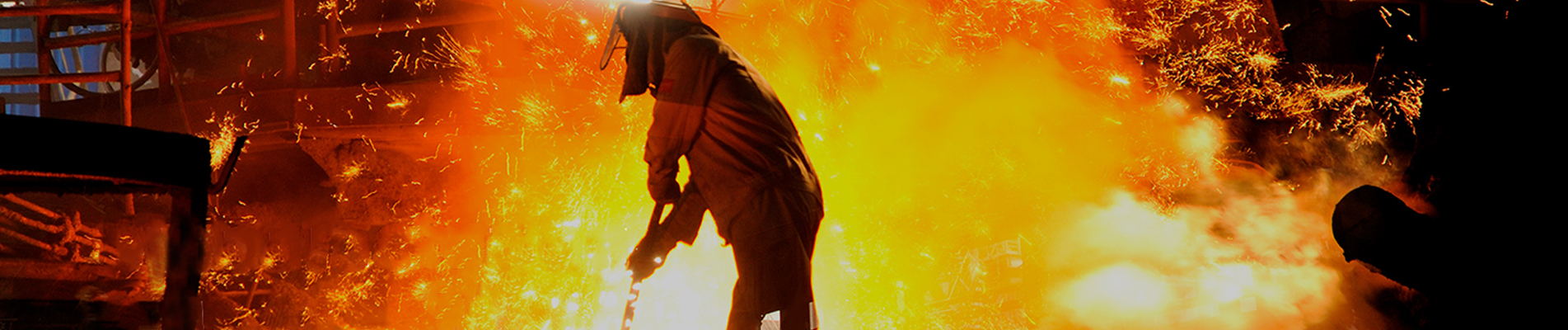
BSTFLEX fabrique des profilés ronds, rectangulaires, carrés et spécifiques à une application.joints de dilatation non métalliquespour les fabricants d'équipements OEM, les entrepreneurs en gaines de ventilation, les systèmes de production d'énergie, les cimenteries, les équipements de traitement de l'acier, les fours industriels, les systèmes de ventilation et autres installations de traitement à haute température.
| Produit | Joint de dilatation en tissu non métallique |
| Noms alternatifs | Joint de dilatation en tissu, joint de dilatation pour conduit en tissu, joint de dilatation composite en tissu, compensateur non métallique |
| Construction | Construction flexible monocouche ou multicouche |
| Formes | Géométries rondes, rectangulaires, carrées et personnalisées |
| Mouvement | Mouvement axial, latéral, angulaire et combiné |
| Médias typiques | Air chaud, gaz d'échappement, gaz de combustion et gaz de procédés industriels |
| Matériels | Sélectionnés en fonction de la température, du milieu, de l'exposition chimique, de l'abrasion et des exigences mécaniques |
| Taille | Fabrication sur mesure selon les dimensions du dessin ou de l'installation |
| Application | Conduits industriels, systèmes d'échappement, de four, de chaudière, de ventilateur et d'air de process |
UNjoint de dilatation en tissu non métalliqueIl s'agit d'une liaison flexible installée entre des sections de conduits ou d'équipements industriels afin de compenser les mouvements qui, autrement, engendreraient des contraintes dans le système. La dilatation thermique est l'une des causes les plus fréquentes de ces mouvements, mais les vibrations, les déplacements des équipements, les tolérances de fabrication et les mouvements structurels peuvent également nécessiter un contrôle.
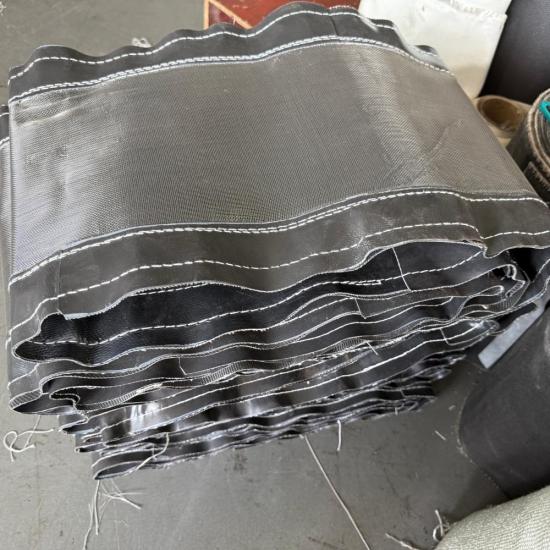
Le corps flexible est généralement fabriqué à partir de textiles techniques et de couches de tissu enduit, plutôt qu'à partir d'un soufflet métallique moulé. Selon les conditions d'utilisation, sa construction peut intégrer une membrane d'étanchéité aux gaz, un tissu de renfort, une isolation thermique et une couche protectrice interne.
Cette construction crée unjoint de dilatation en tissuparticulièrement adapté aux conduits de grande section, aux fluides gazeux chauds et aux applications nécessitant un mouvement dans plus d'une direction.
Les systèmes de conduits industriels se dilatent et se contractent en fonction des variations de température de fonctionnement. Si ces mouvements sont totalement empêchés, des contraintes thermiques peuvent se transmettre aux parois des conduits, aux brides, aux ventilateurs, aux raccords d'équipement et aux structures de support.
Un flexiblejoint de dilatation du conduit textileElle crée une zone de mouvement contrôlé entre les sections adjacentes. Lorsque le conduit se dilate, se contracte ou se déplace, la section flexible modifie sa géométrie au lieu de contraindre l'ensemble du déplacement à des composants rigides.
Selon la géométrie du joint et la conception du système, le joint de dilatation peut accueillir :
Il n'existe pas de structure textile unique convenant à tous les joints de dilatation industriels. Une conception fiable repose avant tout sur les conditions réelles d'utilisation.
Un système multicouche peut contenir plusieurs couches fonctionnelles, chacune effectuant une tâche différente :
La couche d'étanchéité aux gaz permet de contenir le fluide de procédé et est choisie en fonction de la température, de la composition du gaz, de l'humidité, de l'exposition aux produits chimiques et des conditions de pression. Selon l'application, on peut envisager des matériaux en fibre de verre revêtue ou à base de fluoropolymère.
La couche de renfort assure la stabilité dimensionnelle et le support mécanique de l'élément flexible. On peut choisir des textiles techniques en fibre de verre tissée ou autres, en fonction des propriétés mécaniques et thermiques requises.
Les systèmes haute température peuvent nécessiter une couche isolante afin de réduire la température atteignant les matériaux d'étanchéité externes. L'épaisseur et le matériau de l'isolant doivent être choisis en fonction de la température du gaz, des limites de température externe et de la géométrie du joint.
Lorsque le joint de dilatation est exposé à une vitesse de gaz élevée, à des particules ou à des milieux abrasifs, un système de protection interne ou un revêtement d'écoulement peut être nécessaire pour réduire l'impact direct sur l'élément flexible.
Le choix des matériaux est l'un des aspects les plus importants deconception de joint de dilatation non métalliqueBSTFLEX travaille avec une large gamme detissus haute températureet des textiles techniques enduits, permettant d'adapter la construction flexible à différents environnements industriels.
| Type de matériau | Fonction typique | Considérations relatives à la sélection |
|---|---|---|
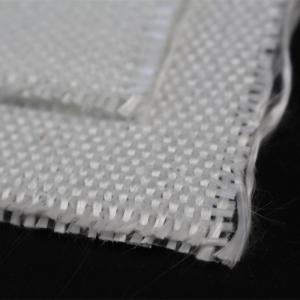
| Tissu en fibre de verre | Reinforcement and thermal-resistant textile layer | Temperature, weight, weave and mechanical strength |
| Silicone Coated Fiberglass | Flexible outer or sealing layer | Temperature, weather resistance, flexibility and environment |
| PTFE Coated Fabric | Gas sealing and chemical-resistant layer | Chemical compatibility, temperature and process media |
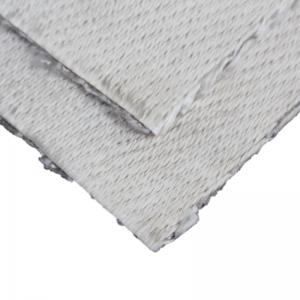
| Silica Fabric | High-temperature thermal protection layer | Temperature exposure and insulation requirement |
| Insulation Materials | Reduction of temperature through the joint construction | Operating temperature and required external surface temperature |
| Metal Mesh or Internal Liner | Mechanical or flow protection where required | Gas velocity, abrasion, particles and installation geometry |
For particularly demanding thermal environments, BSTFLEX can evaluate high-silica textile solutions such as96% high temperature silica fabricas part of the overall thermal protection system where technically appropriate.
The final material combination should always be determined from actual application data rather than temperature alone.
Ahigh temperature fabric expansion jointis not defined by one universal maximum temperature. The permissible operating temperature depends on the complete joint construction, including the hot-face protection, insulation package, reinforcement fabric, gas seal membrane, external cover and the temperature distribution through those layers.
For this reason, BSTFLEX evaluates both process temperature and the temperature expected at individual layers of the expansion joint. This approach allows the materials to be selected for their actual operating environment rather than relying on a single generic temperature rating.
When requesting a high-temperature joint, provide the normal operating temperature, maximum or upset temperature, exposure duration and process medium wherever possible.
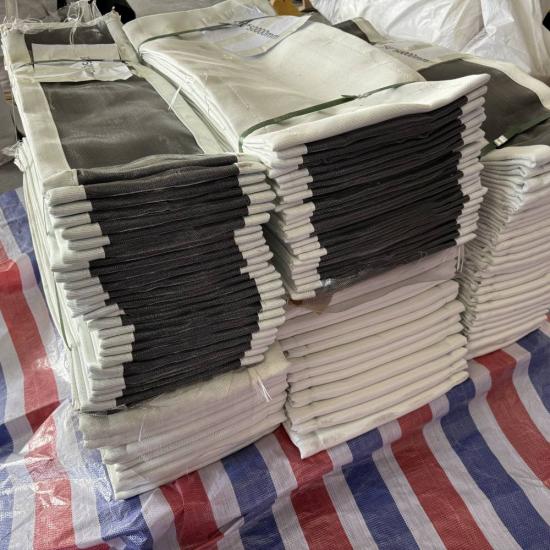
BSTFLEX manufactures expansion joints according to the shape and dimensions of the customer's ducting system.
Arectangular fabric expansion jointis commonly used on large industrial ductwork, boiler systems, air-handling equipment, furnace connections and flue-gas ducts. Corner geometry, movement distribution and attachment design require particular attention because stress is not distributed in the same way as on a circular joint.
Round and circular fabric expansion joints are suitable for cylindrical duct systems, fan connections, exhaust lines and process-air installations. Diameter, face-to-face length and movement requirements can be manufactured according to the installation.
Non-standard shapes, transitions and asymmetric configurations can be evaluated when standard round or rectangular joints cannot match existing equipment.
Different attachment arrangements can be supplied depending on the duct design and replacement requirements.
Belt-type fabric expansion jointsuse a flexible belt attached to mating metalwork and are suitable for many large industrial duct applications.
Flanged fabric expansion jointscan be manufactured as complete assemblies where the flexible element, insulation components and supporting metalwork are supplied as an integrated unit.
For replacement projects, BSTFLEX can manufacture according to customer drawings, dimensional records or available sample information.
BSTFLEXnon metallic fabric expansion jointscan be engineered for a broad range of hot-air and process-gas ducting systems.
Fabric joints can be used in boiler ducting, flue-gas handling systems, fan connections and other large gas-transport ducts where thermal movement and vibration need to be isolated.
Cement production involves large ductwork exposed to heat, dust and continuous equipment movement. Expansion joints may be used around kiln-related ducting, process-air systems, fans and gas-handling equipment.
Furnace exhaust, hot-air ducts and process ventilation systems may require flexible connections capable of accommodating thermal growth while operating around demanding high-temperature equipment.
Where process gases contain corrosive constituents, joint materials should be selected according to chemical compatibility as well as temperature.
Fabric joints can compensate for expansion between heated equipment and downstream ductwork while helping isolate movement and vibration.
Flexible expansion joints can reduce the transmission of mechanical vibration between fans, blowers and rigid ducting.
High-temperature exhaust and hot-gas systems often require a flexible transition capable of accommodating repeated thermal cycles and installation movement.
| Design Factor | Fabric Expansion Joint | Metal Expansion Joint |
|---|---|---|
| Flexible Element | Technical fabric or composite textile construction | Formed metallic bellows |
| Typical System | Industrial ducting and gaseous-media systems | Pipe and process systems including higher-pressure service |
| Large Cross Sections | Well suited to large duct dimensions | Possible but design becomes more complex |
| Multidirectional Movement | Can accommodate axial, lateral and angular movement | Depends strongly on bellows configuration |
| Vibration Isolation | Good flexibility for fan and duct connections | Application dependent |
| Material Selection | Composite layers can be selected for thermal and chemical conditions | Determined mainly by metal alloy and bellows design |
The correct choice depends on pressure, temperature, process medium, duct geometry, required movement and applicable engineering standards. Fabric and metallic expansion joints should therefore not be treated as universally interchangeable products.
Selecting an expansion joint only by duct size or maximum temperature is not sufficient. Several operating parameters interact with each other and influence the appropriate construction.
The following information should be evaluated:
Providing this information allows the flexible element and supporting components to be selected around the real service conditions.
For faster engineering evaluation and quotation, send as much of the following information as available:
| Duct Size | Diameter or width × height |
| Joint Shape | Round, rectangular, square or custom |
| Installation Length | Face-to-face dimension |
| Operating Temperature | Normal continuous temperature |
| Maximum Temperature | Maximum or upset temperature and duration |
| Pressure | Normal and design pressure |
| Process Medium | Air, flue gas, exhaust gas or other process gas |
| Axial Movement | Compression and extension |
| Lateral Movement | Required offset movement |
| Angular Movement | Required angular displacement if applicable |
| Environment | Indoor, outdoor, chemical, dusty, wet or abrasive |
| Drawing | PDF, CAD drawing, dimensional sketch or existing joint details |
| Quantity | Prototype, replacement quantity or production requirement |
Industrial expansion joints are frequently project-specific components rather than standard catalogue parts. BSTFLEX supports customized manufacturing according to drawings, dimensional requirements and operating conditions.
Custom options may include:
Because BSTFLEX also works directly with thermal protection textiles and coated high-temperature fabrics, material construction can be evaluated as part of the expansion joint design instead of treating the flexible element as a generic component.
BSTFLEX focuses on engineered thermal protection and technical textile products for industrial applications. Our manufacturing capabilities cover high-temperature woven fabrics, coated fabrics, insulation materials and fabricated thermal components, providing a practical material base for customfabric expansion jointprojects.
A non metallic expansion joint is a flexible connection used primarily in ducting and gaseous-media systems to accommodate thermal expansion, vibration, misalignment and multidirectional movement. Its flexible element is normally manufactured from technical fabrics, coated textiles, insulation and other non-metallic materials selected according to the operating environment.
A fabric expansion joint uses a flexible textile or composite membrane, while a metallic expansion joint normally uses formed metal bellows. Fabric joints are widely used on large industrial ducts and gas-handling systems, while metallic bellows are common in piping and applications where system pressure or process requirements favor metallic construction.
Yes. Properly designed fabric expansion joints can accommodate axial, lateral and angular movement as well as combinations of these movements. The required movements must be provided during design so the joint geometry can be selected correctly.
There is no single temperature rating for every fabric expansion joint. Temperature capability depends on the flexible membrane, insulation package, hot-face protection, sealing material and overall joint construction. BSTFLEX selects the material system according to the normal operating temperature, maximum temperature and exposure conditions.
Depending on the application, materials may include fiberglass fabric, silicone-coated fiberglass, PTFE-coated fabric, silica fabric, insulation materials and metallic protective components. Each layer is selected according to its specific function.
Yes. Fabric expansion joints are widely applicable to industrial flue-gas and hot-gas ducting when the construction is engineered for the process temperature, chemical composition, moisture, pressure, gas velocity and movement requirements.
Yes. BSTFLEX manufactures rectangular, round, square and other custom configurations according to duct dimensions and installation requirements.
In many cases, yes. Dimensional measurements, photographs, operating conditions and information from the existing expansion joint can be used for an initial evaluation. A complete drawing or physical sample provides additional information when available.
The most useful information includes duct dimensions, joint shape, face-to-face length, operating and maximum temperature, pressure, process medium, axial movement, lateral movement, angular movement, gas velocity, chemical exposure, flange arrangement and required quantity. Drawings are strongly recommended where available.
Pour le remplacement d'un joint de dilatation ou le développement d'un nouveau système de conduits industriels, transmettez à BSTFLEX votre plan et vos conditions d'exploitation. Notre équipe évaluera la forme, les dimensions, les matériaux flexibles, l'isolation et les exigences de mouvement nécessaires à votre application.
Pour obtenir un devis, veuillez fournir :Dimensions des conduits, température, pression, fluide de traitement, exigences de mouvement, longueur d'installation, quantité et plans disponibles.
Demandez un devis pour votre projet de joint de dilatation textile
Précédent:
bouclier thermique de doigt de tigProchaine:
Couverture isolante pour barillet de machine d'injectionsi vous avez des questions ou des suggestions, n'hésitez pas à nous laisser un message, nous vous répondrons dès que possible!

 English
 Deutsch
 русский
 italiano
 español
 português
 Nederlands
 العربية
 日本語
日本語 한국의
한국의 Türkçe
 Polski
 Tiếng Việt
 slovenský
 Indonesia