English
 Deutsch
 русский
 italiano
 español
 português
 Nederlands
 العربية
 日本語
日本語 한국의
한국의 Türkçe
 Polski
 Tiếng Việt
 slovenský
 Indonesia




Knitted fiberglass gasket tape is worth evaluating when an equipment seal needs a soft, conformable strip. Woven fiberglass tape is an alternative where a firmer, more dimensionally restrained textile suits the joint. Neither construction is automatically the better seal. Compare the contact it makes under the available closing load, not just its softness in the hand.
Both constructions are used in industrial thermal insulation and sealing. For an oven door, heated access panel or equipment cover, the practical question is whether the chosen tape fits the seating area and maintains the required contact through operation and maintenance.
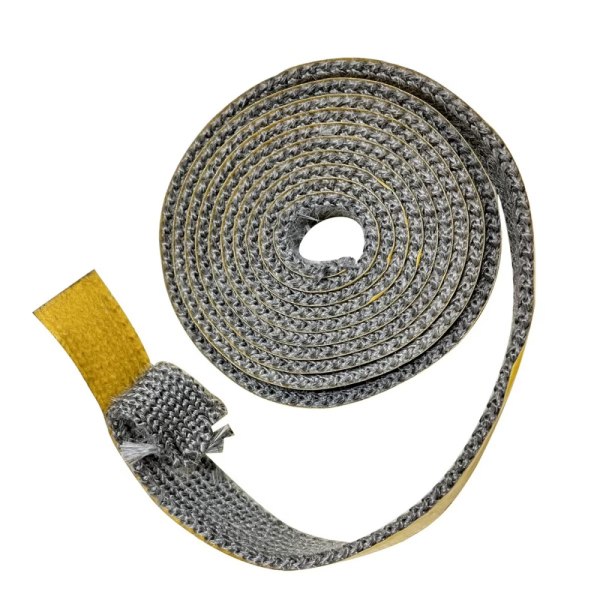
BSTFLEX knitted fiberglass gasket tape uses bulk texturized fiberglass yarns in a flexible knitted construction. The choice between this product and a woven strip should be recorded in the equipment specification rather than left to appearance or color.
What Changes When the Yarn Is Knitted Rather Than Woven?
A knitted textile forms interconnected yarn loops. A woven textile interlaces lengthwise warp yarns with crosswise weft yarns. The looped structure generally gives a knitted tape more freedom to stretch and conform, while the interlaced structure can provide a more restrained strip.
That is a construction tendency, not a complete performance rating. Yarn size, loop or weave density, texturizing, thickness and surface treatment all affect the finished tape. A tightly made knit and a loosely woven textile may behave differently from a simple knit-versus-woven rule.
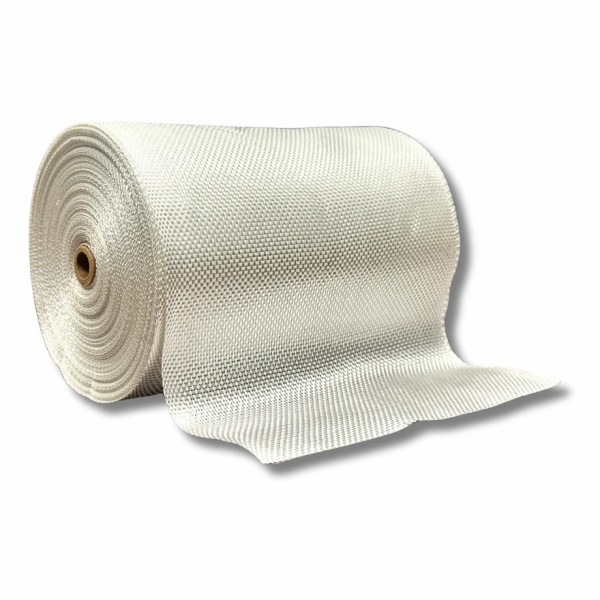
BSTFLEX woven fiberglass insulation tape is also made from texturized yarn. Texturizing is therefore not an exclusive feature of the knitted product, and a woven tape should not be described as inherently rigid or unsuitable for gasketing.
| Comparison point | Knitted fiberglass gasket tape | Woven fiberglass tape |
|---|---|---|
| Fit around contours | Often easier to conform where a soft strip is useful. Check for stretching and local bunching. | Can provide a firmer strip while remaining flexible. Check its fit at the actual bends and transitions. |
| Dimensional control | Specify dimensions in a relaxed condition and control tension during cutting and fitting. | May offer less stretch, depending on the weave. Dimensions and tolerances still need confirmation. |
| Compression in the joint | Evaluate the load needed to reach the installed thickness and the contact obtained. | Evaluate the same conditions. The weave name does not establish a compression percentage. |
| Return after opening | Softness does not prove recovery after sustained compression or heating. | A stable-looking strip also needs evaluation after unloading and the intended service cycle. |
The Useful Comparison Happens with the Door Closed
Two tapes sold at the same nominal thickness may reach different installed thicknesses under the same closing load. Conversely, compressing both to the same gap may require different loads. A hand-squeeze comparison cannot establish which one suits the closure hardware.
For a meaningful trial, distinguish three measurements: thickness before loading, thickness in the closed joint, and thickness after the load is removed. Agree the measuring pressure, loading duration and recovery interval. A lightly resting gauge and a tightly closed caliper can give different impressions of a soft textile.
Compressibility describes how the tape changes under load; recovery describes how it returns after unloading. A strip can compress readily without returning sufficiently for the next closure. Where repeated opening matters, evaluate both rather than selecting the sample that feels softest.
Use the equipment's specified closing arrangement and acceptable force. Do not tighten beyond the design limit merely to make a firmer sample fit. Equally, a door that closes easily has not necessarily developed the required contact across the whole seal.
Do Not Stretch a Knitted Strip to Make the Length
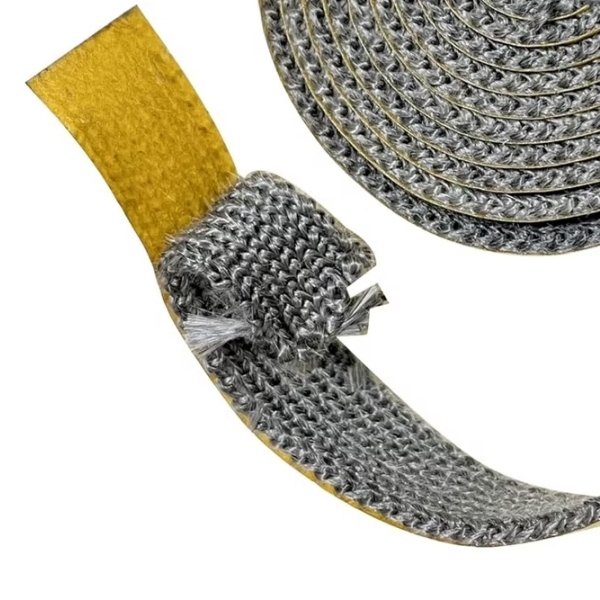
For a flat knitted fiberglass tape, handling tension is part of dimensional control. Pulling the strip can change the loop geometry and its measured dimensions. An apparently correct cut length may therefore represent a different installed condition from a relaxed sample.
As a practical preparation step, lay the tape along the intended route without deliberately stretching it. Check the full contact width and the treatment of corners and joins before cutting repeated pieces. Record the approved method for production or maintenance teams.
A conformable strip may accommodate local surface detail within the approved joint design, but it should not be used to conceal damaged hardware or a distorted seating surface. Establish why the old gasket failed before choosing a softer or thicker replacement.
Graphite Treatment and PSA Backing Are Separate Choices
BSTFLEX offers graphite treatment and pressure-sensitive adhesive backing as options for its knitted fiberglass tape. Specify these separately from the knitted construction. A treated sample and an untreated sample are not a controlled comparison of knitting against weaving.
Do not approve a graphite-treated version from its dark appearance alone. Identify the required treatment and confirm any performance claimed for it. The finish does not, by itself, establish a higher service temperature or a particular sealing result.
A PSA backing can hold the strip in position during assembly. Whether it must continue bonding in service is a separate requirement. Confirm the adhesive's limits and the equipment's permanent retention method; the fiberglass temperature rating is not the adhesive rating.
Judge the Tape After the Relevant Heat Exposure
Knitting changes textile structure, not the identity of the glass fiber. Do not assign a higher temperature limit to one tape simply because it has more loft. Use service data for the exact yarn, treatment and finished construction.
The BSTFLEX knitted tape product information also notes that prolonged elevated-temperature exposure can leave the fabric stiff and brittle. That makes post-exposure handling important for a removable cover or frequently opened door. A sample's room-temperature flexibility before use does not demonstrate its condition after service.
Define a representative exposure with the equipment team and inspect only under the approved safe-access procedure. Check retained position, contact, edge damage and the ability to close again. Where the specification requires a thermal or leakage result, measure that result separately from the tape's appearance.
Neither a knitted nor a woven thermal strip should be assumed to provide a pressure-rated or gas-tight seal. Those requirements belong to the qualified joint design and its acceptance tests.
Compare Samples Without Changing Every Variable
Begin with samples that have comparable width, nominal thickness and surface treatment wherever practical. Record construction differences rather than assuming equal dimensions mean equal material content. Fit each sample in the same representative seating arrangement.
Define the decision criteria before testing: acceptable closure force, contact coverage, retained position and condition after the agreed operating cycle. For a repeatedly opened assembly, include the reopening and refitting duty. The preferred tape is the one that meets these criteria, not necessarily the softer or heavier sample.
Keep the approved sample reference with the drawing revision and installation method. An order that only specifies "white fiberglass tape" leaves the supplier free to interpret a critical construction detail differently.
Specify Knitted Fiberglass Gasket Tape for Repeat Supply
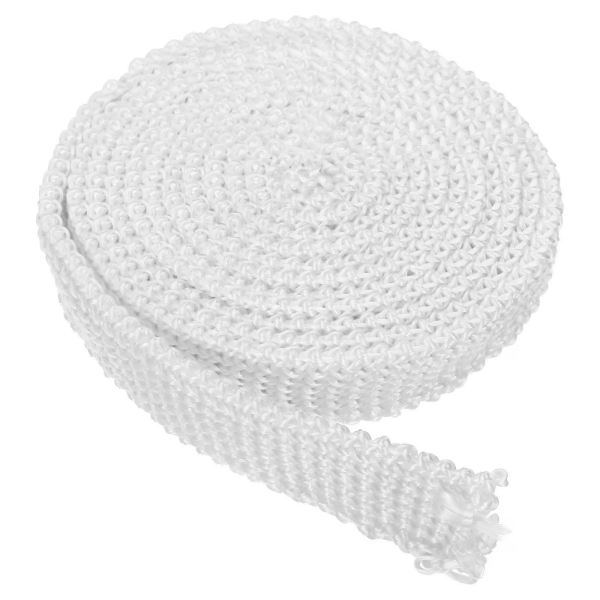
For an OEM or replacement enquiry, provide the relaxed width, nominal thickness and measurement method, required installed condition, roll or cut length, and quantity. Include the joint drawing, normal and peak exposure conditions, closure arrangement and maintenance cycle. State whether graphite treatment or PSA backing is required.
BSTFLEX supplies replacement gasket fiberglass knitted tape for industrial thermal sealing applications. Send your dimensions and equipment detail for review of the proposed construction and supply options.
Compare other structures in the industrial high temperature tapes range, or request a knitted fiberglass gasket tape quotation.