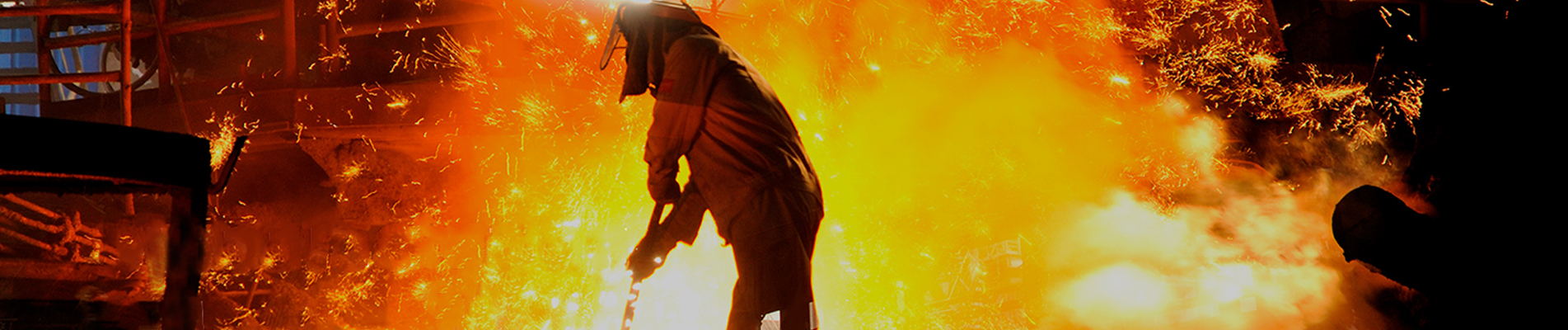
UNjoint de dilatation en tissuIl s'agit d'un raccord flexible installé dans les conduits industriels pour absorber les mouvements entre les sections d'équipement ou de conduit. Au lieu de contraindre les structures rigides en acier à subir la dilatation thermique, les vibrations ou les changements d'alignement, la section flexible se déforme lorsque le système est en mouvement.
Les joints de dilatation en tissu sont couramment utilisés dans les systèmes transportant de l'air chaud, des gaz d'échappement, des fumées et autres fluides gazeux. Leur élément flexible peut être constitué de tissus techniques tissés, de tissus enduits, de membranes d'étanchéité aux gaz, de couches de renforcement et d'isolants thermiques, choisis en fonction des conditions de fonctionnement.
Comme l'élément flexible est non métallique, ce type de joint est également couramment appelé joint à charnière.joint de dilatation non métalliqueoujoint de dilatation en tissu non métallique.
Pour les conceptions industrielles sur mesure, voir laJoint de dilatation en tissu non métallique BSTFLEX.
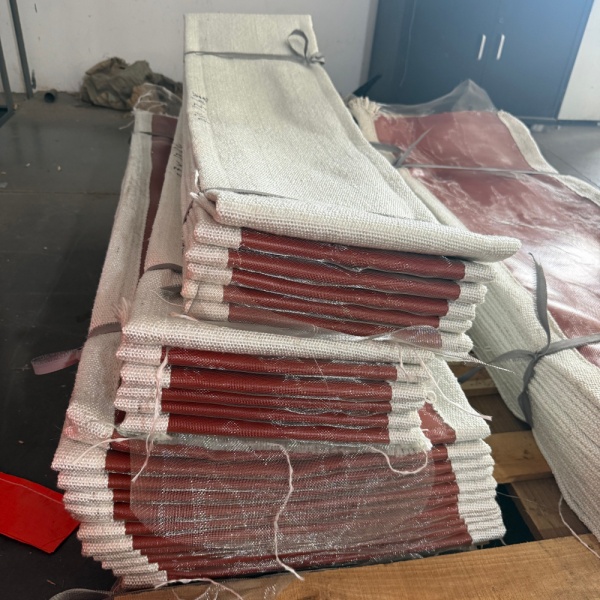
Un joint de dilatation textile est un élément flexible conçu à cet effet et placé entre deux parties relativement rigides d'un système de conduits. Son rôle est de permettre un mouvement contrôlé tout en maintenant la liaison requise entre ces parties.
Les conduits industriels conservent rarement leurs dimensions initiales en fonctionnement. Lorsqu'un four, une chaudière, un système d'échappement ou un conduit de process chauffe, la structure métallique environnante se dilate. En refroidissant, elle se contracte. Les ventilateurs et les équipements rotatifs peuvent également générer des vibrations, tandis que les tolérances d'installation peuvent créer de légers décalages entre les composants adjacents.
Si ces mouvements sont transmis directement par des conduits rigides, ils peuvent créer des charges supplémentaires sur :
Le joint en tissu crée une zone flexible où une partie de ce mouvement peut se produire sans que la structure complète du conduit ait besoin de se comporter comme un assemblage rigide.
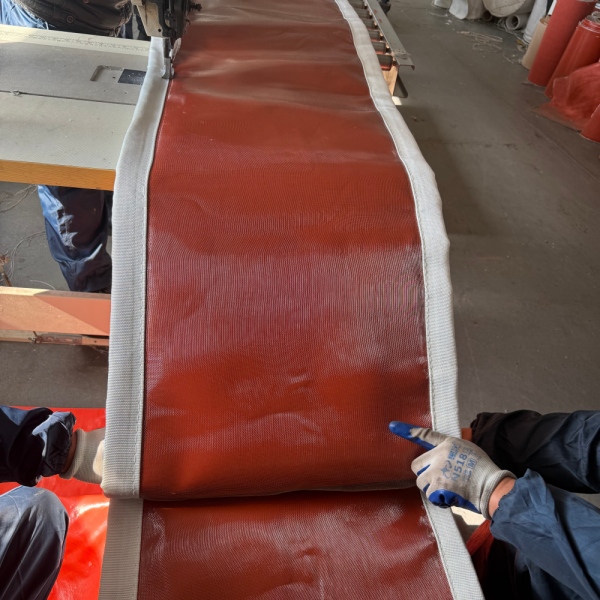
Le termejoint de dilatation non métalliquedécrit l'élément flexible plutôt que chaque composant de l'assemblage complet.
Des cadres métalliques, des barres de serrage, des doublures ou d'autres éléments de quincaillerie peuvent toujours être utilisés autour de l'articulation. Cependant, la partie assurant le mouvement flexible principal est fabriquée en tissu, en élastomère, en textile enduit, en membrane laminée ou en une combinaison de ces matériaux, au lieu d'un soufflet métallique moulé.
Cette distinction est importante car les joints de dilatation en tissu et métalliques se comportent différemment.
Un soufflet métallique absorbe les mouvements grâce à la flexion de ses circonvolutions métalliques profilées. Un joint de dilatation textile utilise la flexibilité de sa bande textile ou composite pour se déformer en fonction des mouvements du conduit.
Pour les grands conduits industriels, notamment ceux transportant des fluides gazeux à pression relativement basse, cette construction peut offrir une capacité de mouvement considérable dans un espace d'installation compact.
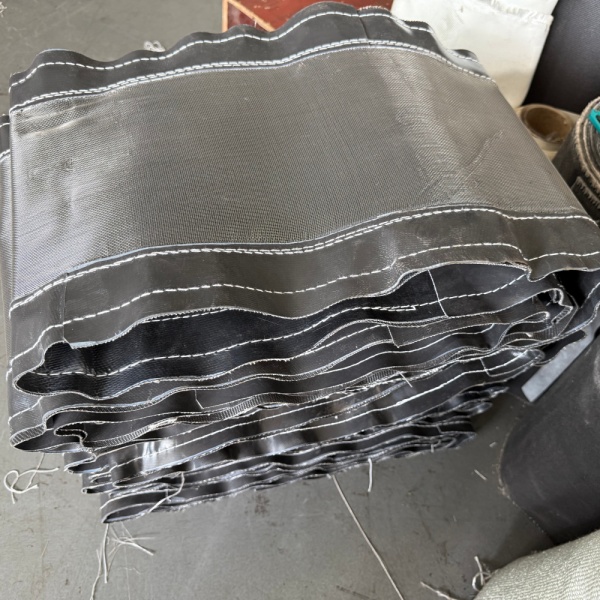
Le principe de fonctionnement de base est simple.
Imaginez deux sections de conduit d'air chaud séparées par un espace contrôlé. Un élément textile flexible comble cet espace et est solidement fixé sur le périmètre de chaque section de conduit.
Lorsque les conduits chauffent et se dilatent, la distance ou l'alignement entre les deux sections se modifie. Au lieu de résister à ce mouvement comme le ferait une liaison rigide, la courroie flexible se déforme.
Selon sa conception, l'articulation peut réagir à plusieurs types de mouvements.
La compression axiale se produit lorsque la distance entre les deux sections de conduit diminue le long de l'axe central.
Ce phénomène se produit fréquemment lorsque la dilatation thermique provoque le déplacement d'une section de conduit vers une autre. La section flexible se comprime ou se replie de manière contrôlée pour compenser la réduction de distance.
L'extension axiale est la condition inverse. La distance entre les sections de connexion augmente le long de l'axe longitudinal.
L'élément textile doit disposer d'une géométrie suffisante pour s'étendre sans être étiré au-delà de sa capacité.
Un mouvement latéral se produit lorsqu'un raccord de conduit se déplace latéralement par rapport à l'autre.
Ceci est particulièrement important dans les grands systèmes de conduits où le mouvement des équipements, la dilatation thermique dans une autre direction ou la géométrie de l'installation créent un décalage plutôt qu'une simple compression ou extension.
Un mouvement angulaire se produit lorsque les deux faces de jonction ne sont plus parallèles.
La courroie flexible se déforme de manière irrégulière sur son périmètre, permettant à un côté de se comprimer tandis qu'une autre section s'étend.
Les systèmes industriels réels ne se déplacent pas toujours dans une seule direction. Des déplacements axiaux, latéraux et angulaires peuvent se produire simultanément.
C'est l'une des raisons pour lesquellesjoint de dilatation du conduit textileCette solution est particulièrement utile dans les réseaux de conduits complexes. La géométrie des joints peut être conçue en fonction de la combinaison de mouvements attendue, plutôt que de traiter chaque déplacement indépendamment.
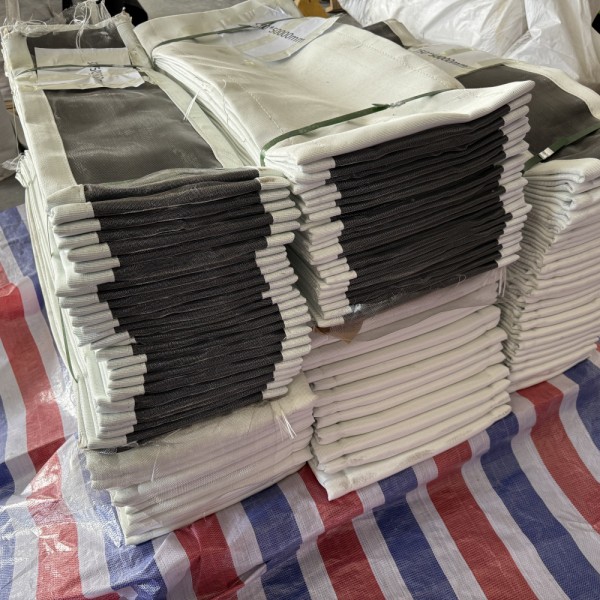
La dilatation thermique est la raison la plus connue pour installer un joint de dilatation, mais ce n'est pas la seule.
L'exigence de mouvement complet peut résulter de plusieurs conditions de fonctionnement.
| Cause | Que se passe-t-il dans le système ? | Rôle du joint de dilatation |
|---|---|---|
| Dilatation thermique | Les conduits métalliques se dilatent lorsque la température augmente. | Permet un mouvement dimensionnel contrôlé |
| contraction thermique | Les conduits se contractent pendant l'arrêt ou le refroidissement. | Allows the system to return toward its cold position |
| Fan Vibration | Mechanical vibration is transferred from rotating equipment | Provides a flexible connection between equipment and ducting |
| Misalignment | Connecting duct faces may not be perfectly aligned | Can accommodate specified offsets within the joint design |
| Structural Movement | Supports or equipment may move relative to each other | Provides a controlled flexible section |
| Operating Cycles | Repeated heating and cooling creates cyclic movement | Accommodates repeated dimensional changes when correctly designed |
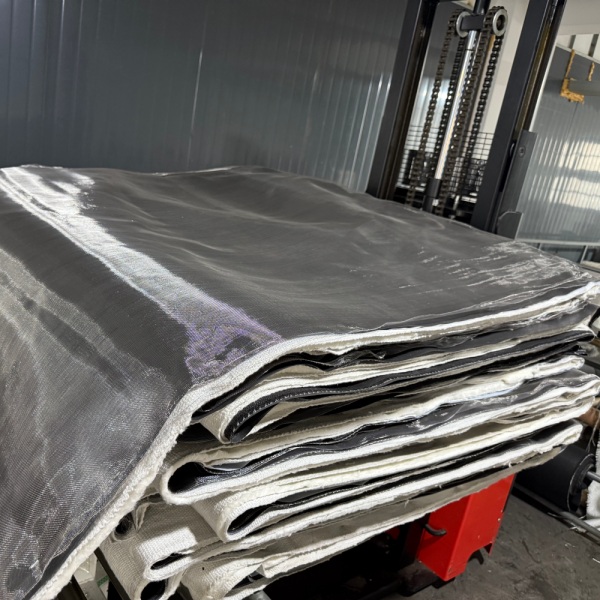
A fabric expansion joint should not be viewed simply as a piece of cloth connecting two ducts.
The flexible section is an engineered material system. Depending on service conditions, it may use a single flexible layer or several different layers, each selected for a specific function.
The outer layer forms part of the flexible envelope and may also provide resistance to weathering, environmental exposure or external mechanical conditions.
This layer helps contain the process gas. Its material must be compatible with the expected temperature, gas composition, moisture and chemical exposure.
Reinforcement provides mechanical support and dimensional stability to the flexible element. Fiberglass and other technical textile constructions are commonly considered depending on temperature and mechanical requirements.
High gas temperature does not necessarily mean every layer of an expansion joint should be exposed directly to that temperature.
An insulation package can reduce heat transfer from the process side toward temperature-sensitive sealing or outer layers.
Hot gas velocity, ash, dust or abrasive particles can damage an unprotected flexible surface. Some systems therefore require an internal liner, baffle or other protection to shield the joint from direct gas flow and particulate impact.
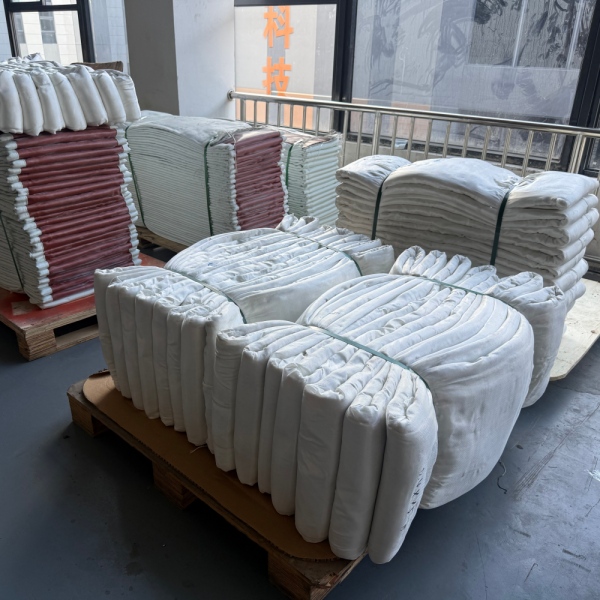
One material rarely provides every property required by a severe industrial application.
For example, a material with excellent temperature resistance may not provide the best gas sealing. A highly flexible sealing material may require reinforcement. A chemically resistant membrane may need insulation to keep its operating temperature within an acceptable range.
As a result, manyfabric expansion jointsuse a combination of materials rather than one fabric performing every function.
Typical material families include:
BSTFLEX also manufactures a broad range ofhigh temperature fabrics, allowing material construction to be evaluated according to thermal, chemical and mechanical requirements.
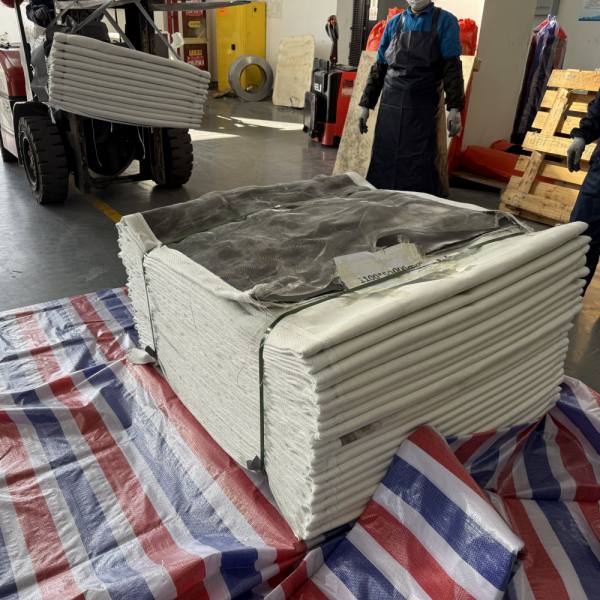
Fabric joints are mainly associated with industrial gas-handling and ducting systems rather than conventional high-pressure liquid piping.
Typical applications include the following.
Boilers, furnaces and combustion equipment can generate hot flue gases that must travel through large duct networks. These ducts experience significant dimensional change between ambient and operating temperatures.
Exhaust ducts connected to engines, industrial furnaces, thermal processing equipment or pollution-control systems may require movement compensation between hot equipment and downstream ducting.
Power plants use large gas-handling systems around boilers, fans, air-handling equipment and emission-control installations. Thermal growth and vibration can occur at multiple connection points.
Cement production combines heat, large duct dimensions, dust and continuous process operation. Flexible expansion sections may be required around kiln-related systems, fans and process ducts.
High-temperature furnaces, hot-air systems and exhaust ducts in steel and metal-processing plants can generate significant thermal movement.
Placing a flexible connection between rotating equipment and rigid ducting can help prevent all equipment movement from being transmitted directly into the surrounding duct structure.
Large ducting systems used with filtration, scrubber, flue-gas treatment and other air-pollution-control equipment often need flexible connections between process components.
Both products are intended to manage movement, but they should not be considered interchangeable simply because they share the term “expansion joint.”
| Characteristic | Fabric Expansion Joint | Metallic Bellows |
|---|---|---|
| Flexible Element | Fabric, coated textile or composite membrane | Formed metal bellows |
| Common Application | Large industrial ducts and gaseous-media systems | Industrial piping and engineered duct or process systems |
| Movement Method | Flexible belt changes geometry | Metal convolutions flex |
| Large Duct Sizes | Well suited to custom large cross-sections | Requires application-specific metallic design |
| Multidirectional Movement | Can accommodate several movement directions in one flexible section | Depends on bellows geometry and assembly design |
| Material System | Can combine several fabric, coating and insulation layers | Primarily determined by metallic alloy and bellows construction |
Pressure, temperature, process medium, movement, duct size and system design must all be considered before deciding which expansion joint technology is appropriate.
A flexible joint can help isolate vibration between connected components because its flexible element does not behave like a completely rigid metal duct section.
This is useful near fans, blowers and other equipment that produces mechanical vibration.
However, vibration should still be treated as an engineering input. Frequency, amplitude, equipment arrangement and joint geometry all influence performance. A fabric expansion joint should not be selected only because a system is described as “vibrating.”
There is no universal movement value that applies to every fabric expansion joint.
Movement capability depends on:
For this reason, axial, lateral and angular movements should be stated separately when specifying a custom expansion joint.
A request such as “50 mm total movement” is less useful than specifying how that movement occurs.
For example:
These values are examples of how movement information can be communicated, not standard ratings for every joint.
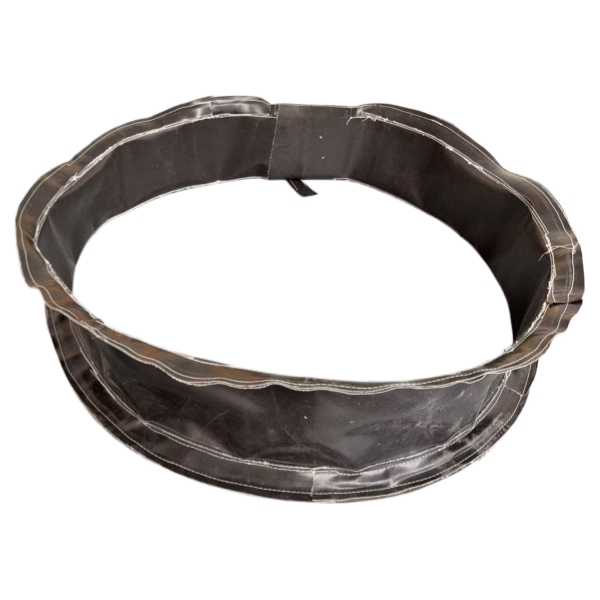
There is also no single temperature rating that defines all fabric expansion joints.
The allowable process temperature depends on the complete construction.
A high-temperature joint may be designed so that the process-side protection and insulation reduce the temperature reaching the gas-sealing membrane and external flexible layers.
Temperature selection should therefore consider:
This is why specifying only “high temperature fabric expansion joint” is insufficient for engineering selection.
A manufacturer needs more than the nominal duct dimensions to select a reliable construction.
The most useful project information includes:
| Design Information | Typical Details Required |
|---|---|
| Duct Geometry | Round, rectangular, square or special shape |
| Dimensions | Diameter or width and height |
| Face-to-Face Length | Available installation distance |
| Temperature | Normal and maximum process temperature |
| Pressure | Positive or negative operating and design pressure |
| Process Medium | Hot air, flue gas, exhaust gas or other process gas |
| Axial Movement | Compression and extension |
| Lateral Movement | Required transverse offset |
| Angular Movement | Required angular displacement |
| Chemical Conditions | Acidic, alkaline, moisture or other process exposure |
| Particulate Loading | Dust, ash or abrasive particles |
| Installation Environment | Indoor, outdoor, weather exposure or confined area |
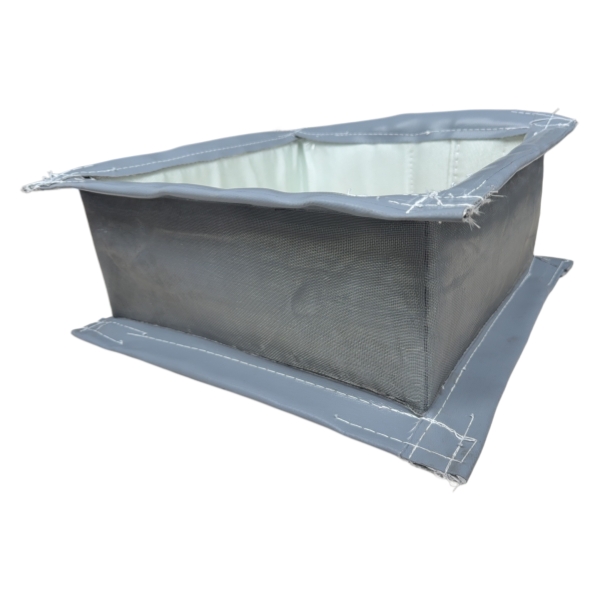
Anon metallic expansion jointshould be considered when an industrial ducting system needs flexibility and the operating conditions are suitable for a fabric-based construction.
Typical reasons include:
The final decision should always be based on actual system conditions rather than the product name alone.
Some basic constructions can be standardized, but industrialfabric expansion jointsare frequently customized.
Two ducts with the same dimensions may require completely different expansion joints if they operate at different temperatures, carry different gases or experience different movements.
Important differences may include:
This is why drawings and operating data are particularly valuable when sourcing replacement or OEM fabric expansion joints.
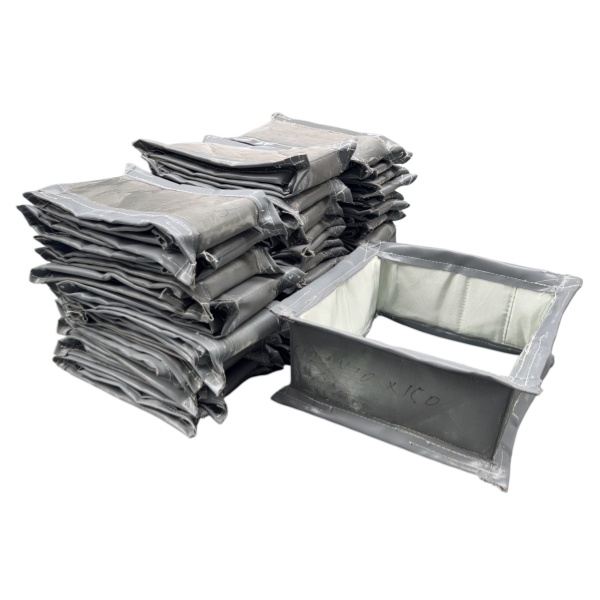
Rectangular joints are widely used on large industrial duct systems. Their corner sections require careful design because the flexible element does not deform identically along straight sides and corners.
Round joints are used on circular ducting, fan connections and exhaust systems. The circumference provides a continuous attachment surface around the duct.
Square configurations are similar in principle to rectangular designs but may be required by specific duct or equipment layouts.
Transitions, non-standard dimensions and application-specific geometries can be manufactured when existing industrial equipment cannot accept a standard shape.
Expansion joint service life depends heavily on correct specification and installation.
Potential failure mechanisms include:
A damaged joint should therefore not automatically be replaced with an identical copy without understanding why the original unit failed.
For replacement projects, operating history can be as valuable as dimensional information.
In industrial ducting, the terms are often used for closely related products. A fabric expansion joint uses a flexible non-metallic fabric or composite element, so it falls within the broader non-metallic expansion joint category. The exact terminology varies by industry and construction.
It provides a flexible connection between sections of industrial ductwork so thermal expansion, contraction, lateral displacement, angular movement, vibration and specified misalignment can be accommodated without making the connection completely rigid.
Typical locations include industrial exhaust ducts, flue-gas systems, furnace and boiler ductwork, fan connections, cement plants, power-generation equipment, steel-processing facilities and air-pollution-control systems.
Yes. Depending on the design, they can accommodate axial compression, axial extension, lateral movement, angular movement and combinations of these movements.
No. Fiberglass is an important reinforcement and high-temperature textile, but complete expansion joints may combine coated fiberglass, PTFE-coated fabric, silicone-coated textiles, silica fabrics, insulation and other materials according to operating conditions.
Oui, à condition que le système de matériaux complet soit conçu pour la température et les conditions gazeuses réelles du procédé. Les applications à haute température nécessitent souvent plusieurs couches fonctionnelles et une protection adéquate entre le flux de gaz chaud et l'élément d'étanchéité flexible.
Pas automatiquement. Les joints de dilatation en tissu et en métal présentent des caractéristiques différentes en termes de pression, de mouvement, de température et de propriétés mécaniques. Il est indispensable d'évaluer les conditions du système avant de modifier la technologie des joints de dilatation.
Les informations utiles comprennent la largeur et la hauteur ou le diamètre du conduit, la longueur entre faces, les dimensions des brides, la disposition des boulons, la forme du joint et l'espace disponible pour l'installation. La température de fonctionnement, la pression, le fluide et les exigences de mouvement sont également essentiels.
BSTFLEX développejoints de dilatation en tissuPour les applications industrielles de conduits d'évacuation, d'air chaud et de gaz de combustion. La construction peut être adaptée aux géométries de conduits rondes, rectangulaires, carrées et non standard, avec des systèmes de matériaux sélectionnés en fonction de la température, de la pression, du fluide de traitement, du mouvement et des conditions d'installation.
Si vous développez un nouveau système ou remplacez un joint existant, consultez la documentation.Joint de dilatation en tissu non métallique BSTFLEXPage produit présentant les options de construction et de personnalisation disponibles.
Pour l'évaluation technique, veuillez envoyer les dimensions de votre conduit, la température normale et maximale, la pression de service, le fluide de traitement, le mouvement axial, le mouvement latéral, la longueur d'installation, la quantité et les dessins disponibles.
Demander un devis pour un joint de dilatation textile sur mesure

 English
 Deutsch
 русский
 italiano
 español
 português
 Nederlands
 العربية
 日本語
日本語 한국의
한국의 Türkçe
 Polski
 Tiếng Việt
 slovenský
 Indonesia