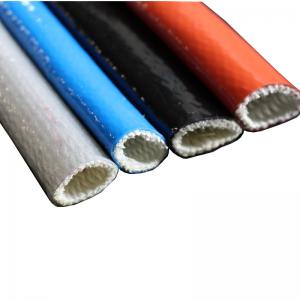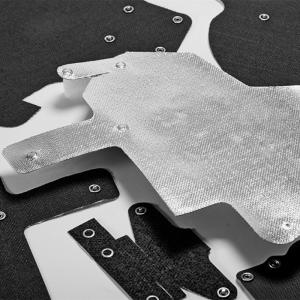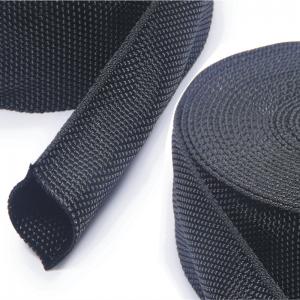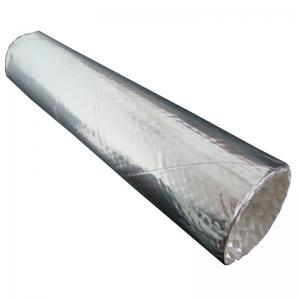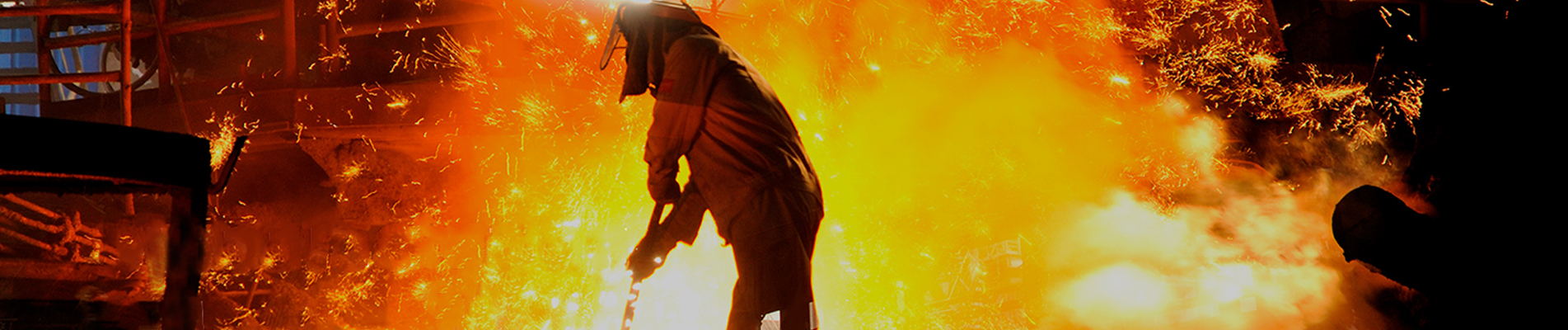
L'indice de température du tissu en fibre de verre enduit de silicone est souvent mal compris. Une spécification peut indiquer que le tissu de base en fibre de verre peut supporter environ 550°C, tandis que le tissu fini enduit de silicone a une température de fonctionnement continu nettement inférieure. Les deux chiffres peuvent être corrects car ils font référence à différentes parties du même matériau composite.
La limite de température pratique du tissu en fibre de verre enduit de silicone est normalement contrôlée par le revêtement en silicone, et non par les fibres de verre tissées seules. La formulation du silicone, le poids du revêtement, la durée d'exposition, le flux d'air, la chaleur rayonnante, les contraintes mécaniques et la construction du système d'isolation fini peuvent tous affecter la durée de vie.
Pour les applications industrielles, la bonne question n'est donc pas simplement « Quelle chaleur la fibre de verre peut-elle supporter ? » C'est :Quelle température atteint réellement la surface enduite de silicone, et pendant combien de temps ?
Pour les spécifications des matériaux BSTFLEX et les constructions disponibles, voirTissu en fibre de verre enduit de silicone pour l'isolation haute température.
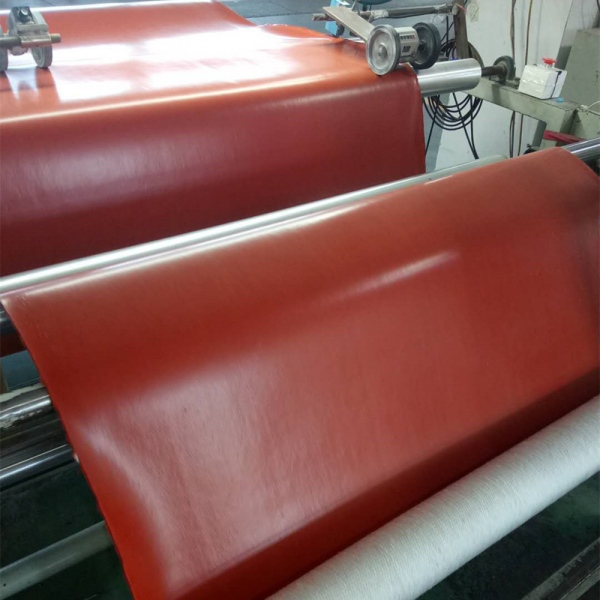
Il n'existe pas d'indice de température unique qui s'applique à tous les tissus en fibre de verre enduits de silicone.
Différents fabricants utilisent différentes formulations de silicone, tissus de base, poids de revêtement et systèmes de durcissement. Pour cette raison, les températures de fonctionnement continu publiées pour les tissus industriels en fibre de verre et silicone peuvent varier selon la qualité du produit.
De nombreux matériaux commerciaux en fibre de verre enduits de silicone sont spécifiés autour de 260°C / 500°F pour un service continu. Le substrat en fibre de verre E tissé lui-même peut supporter environ 550°C / 1022°F dans des conditions appropriées. Cependant, la température plus élevée de la fibre de verre ne doit pas être automatiquement utilisée comme indice de service du composite enduit.
BSTFLEX fabrique également des constructions en fibre de verre enduites de silicone spécifiques à l'application, avec des performances de température déterminées par le système de silicone sélectionné et la spécification du tissu. Pour la construction de produit p216 actuelle, les conseils de sélection publiés distinguent la température de base de la fibre de verre de la capacité de température continue et à court terme du matériau enduit.
Comprendre la différence entre ces deux indices de température est essentiel lors de la spécification du matériau.
| Composant du matériau | Considération de température | Ce que cela signifie |
|---|---|---|
| Tissu de base en fibre de verre | Jusqu'à environ 550°C / 1022°F selon la construction | Le renfort en verre tissé peut conserver des propriétés structurelles utiles à des températures supérieures à celles de la plupart des revêtements en silicone. |
| Revêtement en silicone | Dépendant de la qualité | Le revêtement polymère établit généralement la température de surface continue pratique du tissu enduit fini. |
| Tissu enduit fini | Doit suivre la spécification spécifique du produit | Le composite complet ne doit pas être automatiquement évalué en fonction de la température de la fibre de verre nue. |
| Exposition à court terme | Normalement plus élevée que le service continu | La température de pointe n'est significative que lorsque la durée admissible et les conditions d'exposition sont définies. |
Cette distinction explique pourquoi voir « fibre de verre 550°C » dans une spécification ne signifie pas qu'un tissu en fibre de verre enduit de silicone doit fonctionner en continu à 550°C.
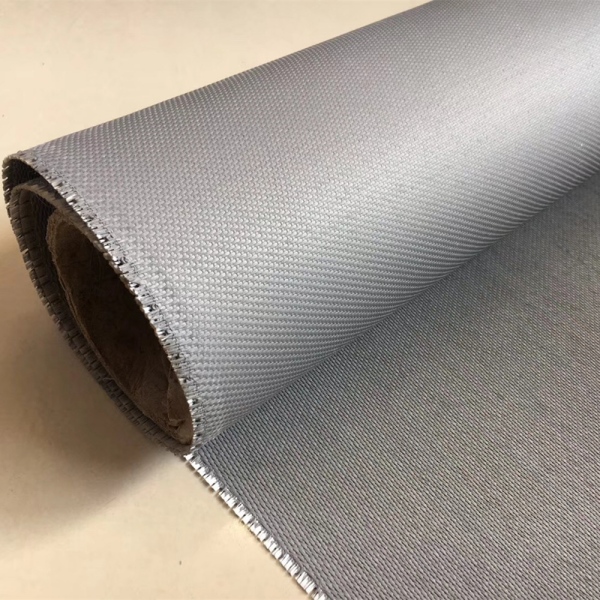
La fibre de verre est une fibre de verre inorganique. Le caoutchouc de silicone est un matériau polymère. Ils réagissent différemment lorsqu'ils sont exposés à des températures élevées.
Le renfort en fibre de verre fournit :
Le revêtement en silicone sert à un objectif différent. Il peut fournir :
À mesure que la température dépasse la plage de fonctionnement prévue du revêtement, le silicone peut progressivement durcir, se décolorer, perdre sa flexibilité ou se détériorer, même si le renfort en fibre de verre situé en dessous reste structurellement présent.
C'est pourquoi l'état des fibres de verre seul ne suffit pas à déterminer si le tissu enduit fonctionne toujours correctement.
Une autre source courante de confusion est la différence entre la température de fonctionnement continue et la température à court terme ou intermittente.
La température continue décrit l'environnement thermique dans lequel le tissu sélectionné est censé rester en service pendant de longues périodes tout en conservant les propriétés fonctionnelles requises.
Pour une gaine d'isolation ou un joint de dilatation, cela peut représenter des centaines ou des milliers d'heures de fonctionnement. Une exposition à long terme est donc beaucoup plus exigeante qu'un bref pic de température.
La température à court terme fait référence à une température plus élevée que le matériau peut subir temporairement.
Une spécification utile à court terme doit toujours définir :
Un matériau survivant à une température élevée pendant plusieurs minutes ne signifie pas qu'il peut fonctionner en continu à cette température.
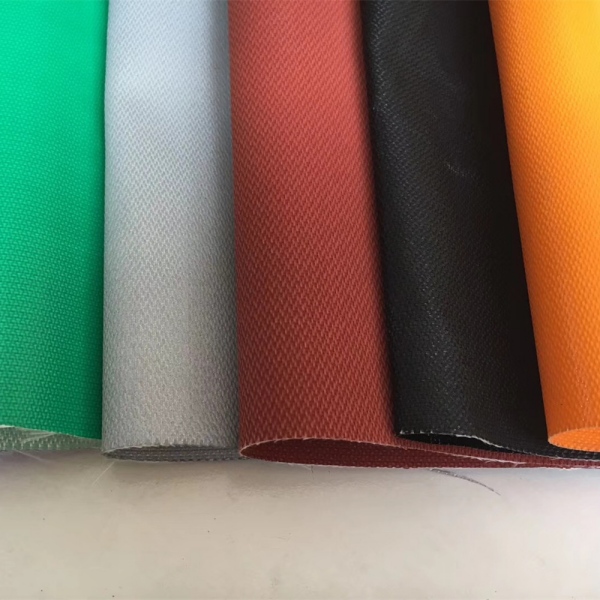
Pour de nombreux produits industriels en fibre de verre enduits de silicone, environ 500°F / 260°C est une température de fonctionnement continue couramment publiée.
Ceci doit être traité comme une référence industrielle courante plutôt que comme une spécification universelle. Les matériaux individuels peuvent avoir des indices approuvés inférieurs ou supérieurs en fonction de la formulation du silicone, de la quantité de revêtement et de la construction du tissu.
Les acheteurs industriels doivent donc spécifier la température de fonctionnement requise et obtenir l'indice pour la qualité exacte achetée plutôt que de supposer que chaque tissu en fibre de verre siliconé fonctionne de manière identique.
Certaines constructions en fibre de verre enduites de silicone peuvent être spécifiées pour un service approchant les 300°C, selon la formulation du silicone et les conditions de fonctionnement.
Cependant, 300°C ne devrait pas être automatiquement appliqué à chaque tissu en fibre de verre siliconé sur le marché.
Pour un projet BSTFLEX nécessitant un fonctionnement dans cette plage de température, le matériau doit être sélectionné en fonction du système de revêtement spécifique, de la durée de service requise et de la température réelle atteignant la face enduite.
Si l'application fonctionne en continu près de la limite supérieure du revêtement en silicone, une marge d'ingénierie supplémentaire doit être envisagée plutôt que de concevoir le système exactement au maximum publié.
Le substrat en fibre de verre peut être adapté à des températures autour de cette plage en fonction de sa composition et de sa construction, mais cela ne signifie pas que le composite enduit de silicone doit être exposé en continu à 550°C.
À cette température, un revêtement en silicone conventionnel serait généralement le composant limitant.
Si la couche de tissu réelle subit des températures approchant les 550°C, un traitement de surface différent ou un textile haute température différent devrait normalement être évalué.
Selon l'application, les alternatives peuvent inclure Tissu en fibre de verre enduit de vermiculite ou un textile en silice haute température tel que Tissu en silice haute température à 96% .
1000°F équivaut à environ 538°C. C'est proche de la capacité thermique communément admise pour le renfort en fibre de verre lui-même, mais bien au-dessus de la température nominale de service continu habituelle des revêtements en caoutchouc de silicone conventionnels.
Par conséquent, une affirmation telle que « la fibre de verre résiste à 1000°F » ne doit pas être interprétée comme signifiant qu'un composite en fibre de verre enduit de silicone peut fonctionner en continu avec sa surface enduite à 1000°F.
Pour des températures dans cette plage, le matériau de la face chaude et le système d'isolation doivent être conçus de manière à ce que la couche enduite de silicone reste dans sa plage de température approuvée, ou un textile supportant des températures plus élevées doit être sélectionné.
Cette distinction est particulièrement importante pour les matelas d'isolation amovibles.
Un tuyau, une vanne, une turbine ou un composant d'échappement peut fonctionner à une température bien supérieure à la température admissible du tissu extérieur enduit de silicone. Cela n'empêche pas automatiquement l'utilisation de la fibre de verre siliconée comme matériau de revêtement extérieur.
Un système d'isolation amovible typique peut contenir :
La couche d'isolation réduit la température atteignant l'enveloppe extérieure. Par conséquent, un composant fonctionnant à plusieurs centaines de degrés Celsius peut toujours utiliser de la fibre de verre enduite de silicone à l'extérieur si le système d'isolation complet maintient le tissu extérieur dans sa température de service approuvée.
C'est l'une des raisons pour lesquelles la fibre de verre enduite de silicone est largement utilisée dans les matelas d'isolation amovibles .
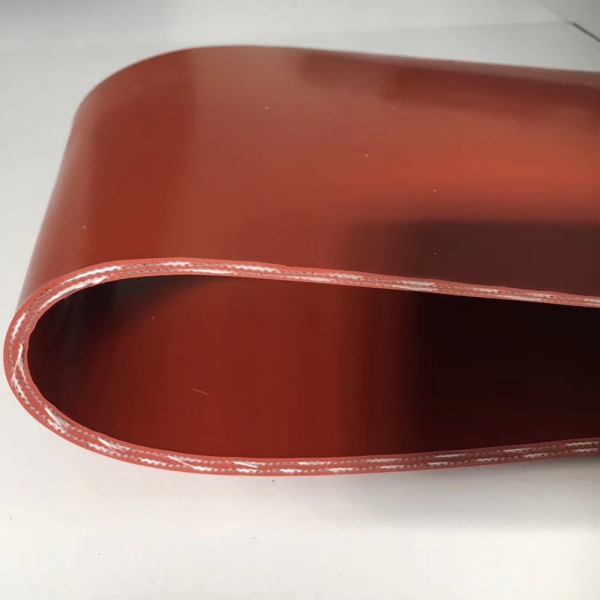
Lors de la spécification du tissu extérieur d'un système d'isolation, la température au niveau de la couche enduite de silicone est normalement plus utile que la température interne du processus.
Par exemple, considérons une vanne chaude fonctionnant à 450°C.
Si l'isolation entre la vanne et l'enveloppe extérieure enduite de silicone réduit la température de surface extérieure à une plage acceptable, la fibre de verre enduite de silicone peut convenir comme couche externe.
Si le tissu en silicone est placé directement contre la vanne à 450°C, la situation est complètement différente.
Par conséquent, une demande de prix (RFQ) qui indique simplement « température de l'équipement : 450°C » ne fournit pas suffisamment d'informations pour sélectionner le tissu enduit approprié.
Deux morceaux de tissu en fibre de verre enduit de silicone peuvent avoir une apparence similaire mais des performances différentes en service. Plusieurs facteurs influencent la capacité thermique et la durée de vie en service.
Différents composés de caoutchouc de silicone utilisent différents systèmes polymères, charges, pigments et additifs. La chimie du revêtement a un effet direct sur la résistance à la chaleur à long terme.
Un revêtement de surface léger et un tissu fortement enduit ne sont pas des produits identiques.
Le poids du revêtement influence l'épaisseur, la flexibilité, la résistance à l'abrasion, les performances d'étanchéité et la masse thermique de la surface enduite.
Le tissage, le type de fil, le poids et l'épaisseur du renfort en fibre de verre influencent la stabilité dimensionnelle et les performances mécaniques.
L'application de silicone sur les deux faces peut améliorer la protection de surface sur les deux faces, mais un double revêtement ne signifie pas automatiquement une température nominale plus élevée.
Les performances thermiques dépendent toujours principalement de la chimie du silicone et de la construction complète.
Dix secondes, dix minutes et dix mille heures de fonctionnement à la même température sont des conditions thermiques complètement différentes.
Une forte énergie rayonnante peut chauffer la surface enduite même lorsque la température de l'air ambiant semble modérée.
Un contact direct avec une surface métallique chaude peut imposer une température locale plus sévère qu'une exposition à l'air chaud ambiant.
Le flux d'air forcé peut soit refroidir le tissu, soit acheminer en continu des gaz chauds vers sa surface, selon la conception du système.
La contamination chimique peut altérer les performances du revêtement, surtout lorsqu'elle est combinée à une température élevée.
Un joint de dilatation ou un raccord flexible subit des cycles mécaniques en même temps qu'une exposition thermique. La résistance à la température seule ne suffit donc pas à prédire la durée de vie en service.
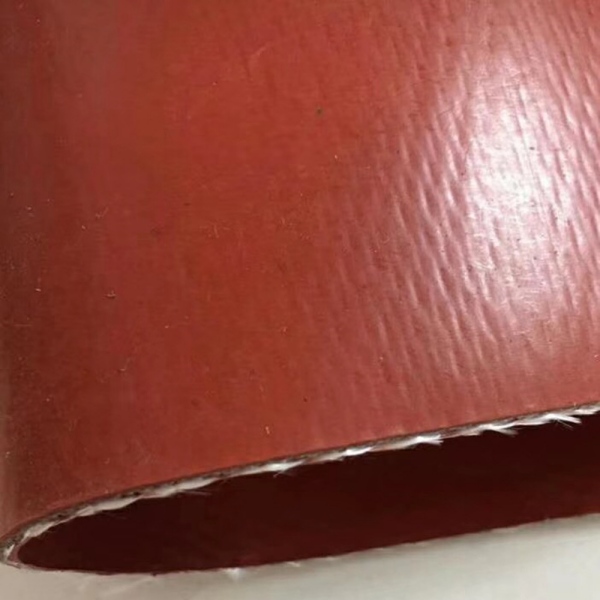
Le tissu en fibre de verre enduit de silicone est largement utilisé comme matériau de revêtement extérieur pour les matelas isolants amovibles, car la couche extérieure fonctionne généralement à une température beaucoup plus basse que l'équipement isolé.
Pour cette application, précisez :
Le tissu doit alors être sélectionné dans le cadre de l'assemblage isolant complet plutôt qu'indépendamment.
Les joints de dilatation en tissu présentent un problème de conception différent car l'élément flexible peut être exposé à des gaz chauds, à la pression, aux vibrations et à un mouvement continu.
Le tissu en fibre de verre enduit de silicone peut être utilisé dans certaines couches d'un Joint de dilatation en tissu non métallique , mais la température au niveau de cette couche spécifique doit rester dans la limite de conception du matériau.
Des températures de gaz plus élevées peuvent nécessiter un coussin isolant interne, une couche réfractaire, un treillis métallique en acier inoxydable, un tissu de silice ou une autre barrière thermique avant la couche enduite de silicone.
Une couverture de soudage ne subit pas les mêmes conditions thermiques qu'un matelas isolant.
Les applications de soudage peuvent impliquer :
Une température nominale continue ne peut donc pas déterminer à elle seule si un tissu est adapté à la protection contre le soudage.
Pour une exposition plus sévère au soudage ou aux projections de métal en fusion, un Tissu en fibre de verre enduit de vermiculite ou un tissu à haute teneur en silice peut être plus approprié qu'un matériau standard enduit de silicone.
Consultez notre gamme Protection pour zones de soudage et brasage pour d'autres options de matériaux.
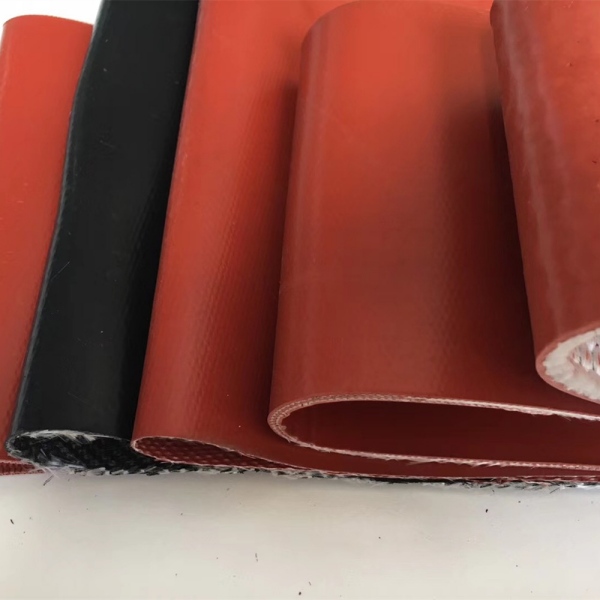
Un matériau décrit comme résistant à la flamme, résistant au feu ou incombustible ne doit pas être automatiquement considéré comme ayant une température nominale continue particulière.
Ces spécifications répondent à des questions différentes.
| Propriété | Ce qu'elle décrit |
|---|---|
| Température continue | Capacité d'exposition thermique à long terme |
| Température intermittente | Exposition à une température plus élevée de courte durée |
| Résistance à la flamme | Comportement lorsqu'il est exposé à une flamme dans le cadre d'un test défini |
| Résistance aux projections de soudure | Résistance aux particules chaudes ou aux gouttelettes en fusion |
| Résistance à la chaleur rayonnante | Performance sous rayonnement thermique infrarouge |
| Résistance au percement par brûlure | Capacité à empêcher la pénétration dans des conditions de chaleur ou de flamme spécifiées |
Pour les applications réglementées ou critiques pour la sécurité, les acheteurs doivent spécifier la méthode d'essai requise plutôt que de se fier à des descriptions générales telles que « tissu ignifuge ».
La surchauffe ne provoque pas nécessairement une défaillance catastrophique immédiate. La dégradation peut se développer progressivement.
Selon la formulation du revêtement et les conditions, les signes peuvent inclure :
Le renfort en fibre de verre peut rester intact après que la surface en silicone a perdu des propriétés importantes pour l'application.
Pour cette raison, inspecter uniquement si le tissu de verre a physiquement brûlé n'est pas une méthode adéquate pour établir une température de fonctionnement acceptable.
Le tissu à haute teneur en silice doit être envisagé lorsque le textile lui-même doit fonctionner en continu à des températures supérieures à la plage pratique de la fibre de verre enduite de silicone.
BSTFLEX Tissu de silice haute température à 96 % est conçu pour des environnements à température nettement plus élevée et peut être utilisé dans des applications telles que la protection contre la chaleur extrême, la protection des fours, les systèmes de soudage et la gestion thermique des échappements.
Le compromis est que le tissu de silice simple n'offre pas le même type de propriétés de surface que le caoutchouc de silicone. Le choix du matériau doit donc être basé sur la combinaison réelle des exigences thermiques, mécaniques et environnementales.
La fibre de verre enduite de vermiculite est utile lorsque l'exigence principale est la résistance à une chaleur, des étincelles ou une exposition à la flamme plus sévères plutôt qu'une protection de surface en silicone résistante à l'humidité.
BSTFLEX Tissu en fibre de verre enduit de vermiculite est couramment sélectionné pour les couvertures de soudage, les rideaux de four, les barrières thermiques et d'autres applications de protection contre les hautes températures.
Pour une sélection précise des matériaux, évitez d'envoyer une seule valeur telle que « température : 300°C ».
Une meilleure demande de devis devrait identifier :
| Information | Exemple |
|---|---|
| Température de l'équipement | 450°C |
| Température de surface prévue du tissu | 180°C |
| Température de fonctionnement en continu | 180°C |
| Température de pointe | 230°C |
| Durée de la pointe | 5 minutes |
| Type de chaleur | Indirecte / rayonnante / contact direct |
| Application | Housse d'isolation amovible pour vanne |
| Environnement | Extérieur, exposition à l'huile |
Ces informations permettent au fournisseur de déterminer si la fibre de verre enduite de silicone est adaptée et quelle construction doit être évaluée.
Il n'existe pas de température maximale universelle pour toutes les qualités. De nombreux tissus industriels en fibre de verre enduits de silicone utilisent environ 260°C / 500°F comme référence de service continu, tandis que des formulations spécifiques peuvent avoir des indices différents. La spécification exacte du produit doit toujours être vérifiée.
Le renfort en fibre de verre et le revêtement en polymère de silicone ont des limites thermiques différentes. La fibre de verre peut conserver ses propriétés structurelles à des températures supérieures à la plage de fonctionnement normale de la surface en silicone, de sorte que l'indice de la fibre de verre nue ne doit pas être utilisé comme indice du tissu enduit fini.
Certaines qualités spécialement formulées peuvent être spécifiées pour des températures approchant cette plage, mais 300°C n'est pas un indice universel pour la fibre de verre enduite de silicone. L'exposition continue par rapport à l'exposition à court terme, la chimie du silicone et la température réelle de la surface enduite doivent être prises en compte.
Il ne faut pas supposer que la fibre de verre enduite de silicone conventionnelle est adaptée à une exposition continue de la surface enduite à 500°C. À de telles températures, des systèmes textiles à haute teneur en silice, traités à la vermiculite ou d'autres systèmes textiles à plus haute température doivent être évalués.
Possiblement comme enveloppe extérieure d'un système d'isolation correctement conçu, mais pas nécessairement en contact direct avec le tuyau. La valeur clé est la température atteignant le tissu enduit de silicone après que le système d'isolation a réduit le transfert de chaleur.
Pas automatiquement. Le revêtement double face améliore la couverture de surface et peut améliorer les performances face à l'humidité, à l'abrasion et à la manipulation sur les deux faces, mais la capacité thermique dépend principalement de la formulation du silicone et de la construction complète du tissu.
Non. La température à court terme décrit une exposition temporaire et doit inclure une durée admissible. La température de fonctionnement en continu est la valeur la plus pertinente pour les équipements qui restent chauds pendant de longues périodes.
Selon la température et le type d'exposition, les options peuvent inclure la fibre de verre enduite de vermiculite, le tissu à haute teneur en silice, les textiles en fibre céramique ou un système d'isolation multicouche qui maintient la couche extérieure enduite de silicone plus fraîche.
La température nominale ne doit jamais être évaluée comme un chiffre isolé.
Pour l'isolation industrielle, les joints de dilatation, la protection contre le soudage et les systèmes thermiques OEM, BSTFLEX recommande de spécifier la température en continu, le pic à court terme, la durée d'exposition, l'emplacement du tissu dans l'assemblage et les conditions environnementales.
Pour les constructions disponibles, les options de revêtement et les spécifications personnalisées, visitez Tissu en fibre de verre enduit de silicone BSTFLEX pour isolation haute température .
Envoyez à BSTFLEX votre température de fonctionnement, la température de surface prévue du tissu, l'épaisseur ou le poids requis, la configuration du revêtement, la largeur, la quantité et les détails de l'application pour la sélection des matériaux, les échantillons et le support de devis.

 English
 Deutsch
 русский
 italiano
 español
 português
 Nederlands
 العربية
 日本語
日本語 한국의
한국의 Türkçe
 Polski
 Tiếng Việt
 slovenský
 Indonesia