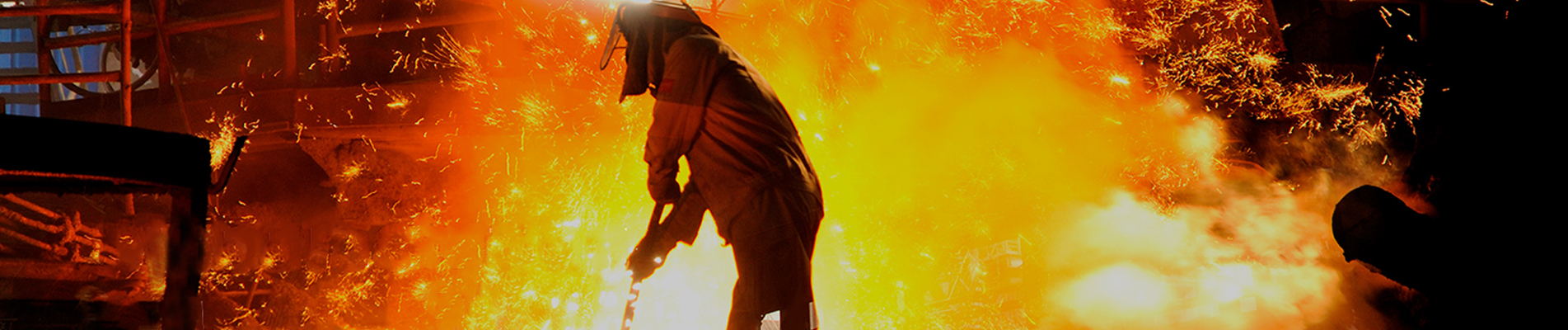
An industrial oven door, furnace access panel or kiln door places several demands on the seal at the same time. The gasket has to tolerate heat, compress against the mating surface, recover after repeated opening cycles, remain in its mounting position and survive abrasion from the door or retaining channel.
That is why two gaskets made from the same fiber can perform very differently.
The outer textile, internal core, profile, density, mounting method and surface reinforcement all affect how the finished seal behaves.
BSTFLEX manufactures a range of high temperature door gaskets and seals using heat-resistant textile fibers and reinforced constructions for industrial thermal equipment.
One of the most common specification errors is using the oven chamber temperature as the only basis for selecting a gasket material.
The actual temperature at the door seal can be different.
A gasket positioned behind an insulated flange may operate considerably differently from a gasket exposed directly to escaping hot gas or radiant heat from the chamber.
Before selecting an oven door gasket material, define:
normal operating temperature;
maximum process temperature;
expected temperature at the gasket location;
duration of peak exposure;
direct hot-gas exposure;
radiant heat exposure;
contact with heated metal;
frequency of door opening;
required service cycle.
This distinction becomes increasingly important when comparing fiberglass, silica and ceramic fiber gasket constructions.
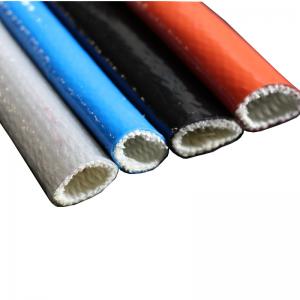
Fiberglass is one of the most widely used textile materials for industrial door sealing because it can be braided, knitted and woven into flexible gasket structures.
A fiberglass oven door gasket can be manufactured as a round tubular seal, braided rope-type profile, clip-mounted gasket or reinforced textile construction.
For many industrial ovens, dryers, curing systems and commercial heating systems, fiberglass is the logical starting point.
Our standard Oven Door Gasket represents this general class of flexible high-temperature textile door seal.
Fiberglass is particularly useful where the application needs:
flexible perimeter sealing;
repeated door opening;
custom gasket dimensions;
braided or knitted construction;
compatibility with different internal cores;
OEM replacement gasket manufacturing.
However, “fiberglass gasket” is still not a complete specification.
A soft fiberglass-core seal and a fiberglass gasket built over a metallic resilient core will not have the same compression response.
The cover material tells only part of the story.
Consider two apparently similar white fiberglass oven door seals.
One may contain a soft textile core.
The other may contain a knitted stainless steel hollow mesh core.
Both can look similar from the outside, yet the way they compress and recover can be completely different.
For applications requiring mechanical attachment and resilient internal support, BSTFLEX manufactures the Clip-On Fiberglass Oven Door Gasket with 304 Stainless Steel Wire Core.
Its fiberglass exterior provides the textile sealing surface, while the internal metallic structure supports repeated compression. Formed clips provide defined attachment points around the door frame.
This type of construction is relevant when buyers are searching for terms such as:
oven door gasket with clips;
clip-on fiberglass oven door gasket;
stainless steel core oven gasket;
wire core oven door gasket;
industrial oven door seal with clips;
compression recovery door gasket.
The important point is that the fiber and the core perform different jobs.
Silica textiles are another option for high-temperature door sealing where the thermal requirement moves beyond the practical range of the selected fiberglass construction.
Silica door seals may be used around:
furnace doors;
kiln openings;
heat treatment equipment;
thermal chambers;
industrial process doors;
high-temperature access panels.
A silica gasket should not automatically be selected simply because the process temperature is high.
The buyer still needs to consider compression, mechanical wear, fastening method and core construction.
Silica textile can form the outer thermal layer, but the gasket may still require a fiber core, ceramic core, stainless steel mesh core or high-temperature alloy reinforcement depending on the design.
For this reason, a request for a “silica door gasket” should ideally also include the required profile and sealing geometry.
Ceramic fiber textile constructions are commonly considered for severe furnace, kiln and thermal-processing sealing applications.
Typical search terms include:
ceramic fiber door gasket;
ceramic fiber furnace door seal;
kiln door gasket;
ceramic rope door seal;
high temperature furnace gasket;
refractory door seal.
Ceramic fiber can be processed into rope, braid and other flexible sealing forms.
These products are especially relevant where the gasket sits in a groove or channel and must fill a high-temperature joint around a furnace or kiln door.
However, the maximum fiber classification temperature should never be treated as the automatic service temperature of a finished door gasket.
The completed assembly may also contain reinforcement yarn, metallic wire, stitching, coatings, adhesives or termination materials.
The whole construction needs to be considered.
There is no single material that is best for every high temperature door.
The correct choice depends on how the gasket is actually used.
| Selection Factor | Fiberglass | Silica | Ceramic Fiber |
|---|---|---|---|
| General industrial oven sealing | Frequently considered | Used for higher thermal requirements | Usually selected for more severe thermal service |
| Flexible braided constructions | Yes | Yes | Yes |
| Furnace and kiln door sealing | Depending on conditions | Suitable for demanding thermal sealing | Common in severe furnace and kiln applications |
| Metallic core compatibility | Yes | Yes | Available in reinforced constructions |
| Custom profiles | Yes | Yes | Depends on textile construction |
| Main selection concern | Heat plus compression and wear | Higher thermal exposure plus mechanical design | Extreme thermal exposure plus complete assembly design |
The table is a selection framework rather than a universal temperature chart.
Actual material suitability should be confirmed against the finished gasket construction and operating conditions.
The core determines much of the mechanical behavior of a textile door gasket.
A soft textile core can provide conformity and relatively low closing resistance.
It can be useful where the door geometry needs a flexible gasket that compresses easily.
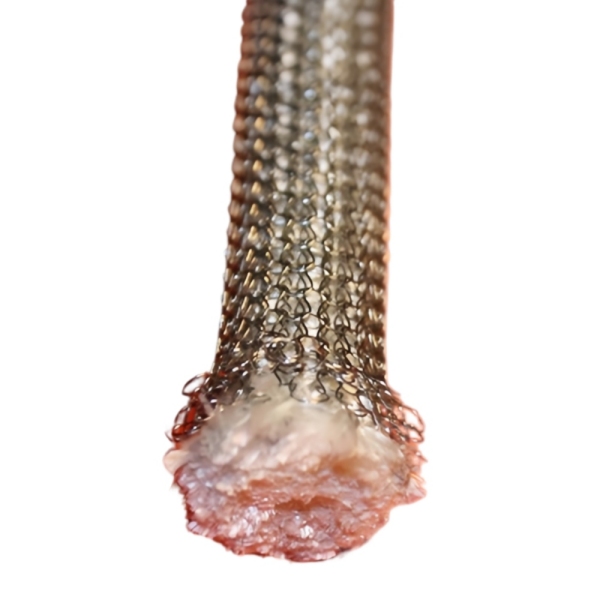
A knitted metallic core creates a resilient internal structure.
The mesh deforms under compression and can provide spring-back when the door opens.
This construction is particularly useful for repeatedly cycled doors.
A hollow mesh structure can provide greater deflection than a dense solid textile core.
It is often selected when the seal needs to accommodate a changing gap or when lower closing force is desirable.
More demanding furnace applications may require alternative metallic reinforcement depending on temperature and environmental conditions.
The core should therefore be selected together with the outer fiber rather than as a secondary detail.
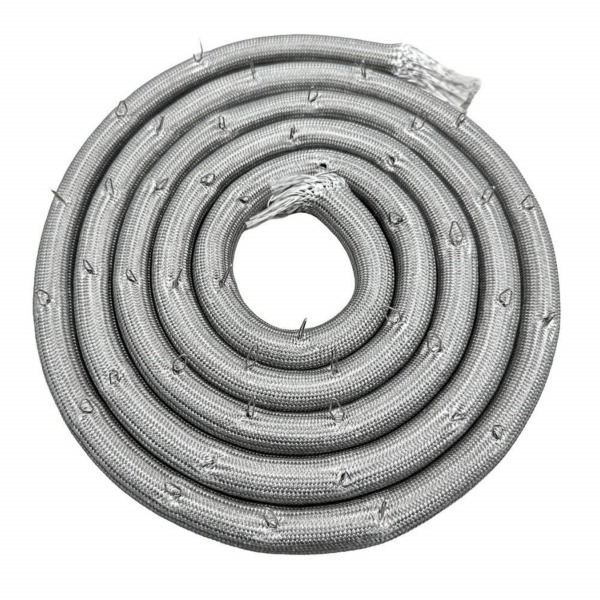
An internal metal core and an external metal jacket solve different problems.
The internal core primarily changes compression and recovery.
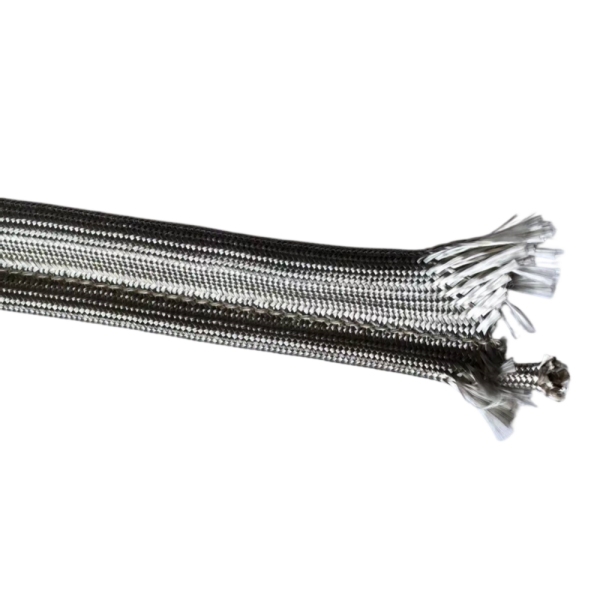
An external stainless steel wire mesh jacket primarily protects the outside of the gasket against abrasion and mechanical wear.
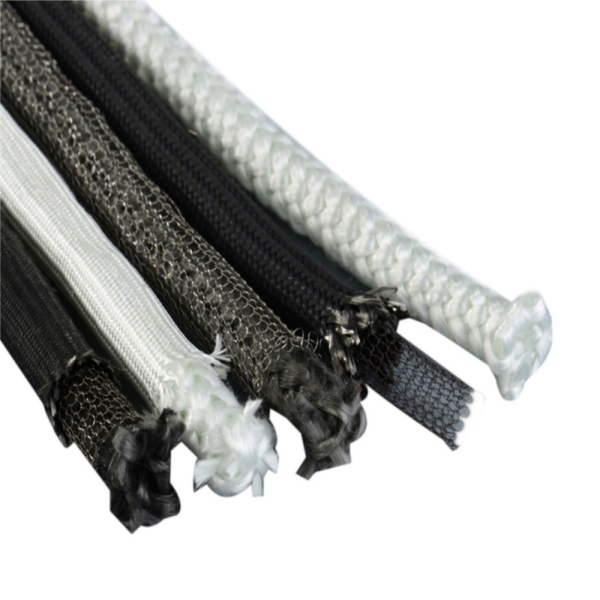
For high-cycle doors where the seal repeatedly rubs against metal surfaces, BSTFLEX offers a Stainless Steel Wire Mesh Jacketed Fiberglass Oven & Kiln Door Gasket.
This construction is particularly relevant where the door seal experiences:
repeated sliding contact;
rough metal surfaces;
abrasive retaining channels;
frequent opening and closing;
installation wear;
mechanical handling during maintenance.
A wire-jacketed gasket should therefore not be selected simply because the process is hotter.
Its main advantage is mechanical protection.
These terms are sometimes confused when buyers request quotations.
They describe different constructions.
Wire core gasket
The metallic component is inside the textile gasket and affects resilience, compression and profile stability.
Wire jacketed gasket
The metallic mesh is outside the textile gasket and protects the sealing body against abrasion.
Some highly engineered gaskets may use both.
When sending an RFQ, specify whether the metal reinforcement is required inside the gasket, outside the gasket or in both positions.
Material is only one part of door gasket selection.
The profile must match the equipment.
Round tubular or braided gaskets are common where the seal sits in a groove, channel or around a door perimeter.
Flat textile seals are useful where the available installation space is shallow or where the gasket is mechanically clamped between surfaces.
A compressible bulb can accommodate larger or less uniform sealing gaps.
Integrated clips or hooks are useful when the equipment already has mounting holes around the door frame.
Industrial equipment may require oval, D-shaped, multi-core or other custom cross-sections when a conventional round gasket does not match the channel geometry.
The correct profile is determined by the mating surfaces and the closed-door gap.
A common purchasing mistake is specifying only the outside diameter of the gasket.
Diameter does not tell the manufacturer how the seal must behave when the door closes.
Two gaskets with the same nominal diameter may have very different densities and internal structures.
For a useful specification, provide:
gasket free height or diameter;
closed sealing gap;
channel width and depth;
minimum and maximum gap;
available latch or closing force;
expected compression;
door opening frequency;
required recovery behavior.
A larger gasket is not automatically a better seal.
If the gasket is too stiff or oversized, the door may become difficult to close and the hinges or latch may carry unnecessary load.
If it is undersized, the gasket may not maintain continuous contact around the perimeter.
Not every door gasket fails because the fiber reaches its thermal limit.
Some seals fail mechanically first.
Repeated rubbing against a steel frame can damage exposed textile yarn. Misaligned doors can create localized wear. Sharp retaining channels can cut into the gasket surface.
When abrasion is severe, changing from one high-temperature fiber to another may not solve the real problem.
The better solution may be:
a protective metal jacket;
a different mounting arrangement;
a changed gasket profile;
improved door alignment;
reduced sliding contact.
This is why the complete application should be reviewed before selecting a material.
For many industrial ovens, fiberglass remains the first material to evaluate.
The buyer should then determine whether the gasket requires:
a soft textile core;
metallic resilience;
clips or hooks;
a coated surface;
abrasion reinforcement;
a custom profile.
A conventional fiberglass oven door gasket may be appropriate for a straightforward sealing requirement.
A clip-on wire-core oven gasket may be more appropriate where repeatable mechanical attachment and resilient compression are required.
A wire mesh jacketed fiberglass gasket may be preferred when mechanical abrasion is the dominant problem.
Furnace and kiln applications often introduce higher thermal exposure, larger doors and more severe mechanical conditions.
Before specifying the gasket, determine:
the actual seal-line temperature;
whether the gasket sees direct radiant heat;
whether hot gas flows across the seal;
door size and weight;
opening frequency;
channel geometry;
compression requirement;
abrasion exposure;
required core resilience.
Silica and ceramic fiber constructions become increasingly relevant as thermal conditions become more demanding, while metallic reinforcement may be required to maintain shape or compression behavior.
The final decision should be made from the complete operating environment rather than a single temperature number.
A high-cycle door creates a different problem.
Even when the temperature is moderate for the selected fiber, the gasket may compress thousands of times during its service life.
For these applications, engineers should pay particular attention to:
compression recovery;
core resilience;
clip or hook retention;
wear at corners;
abrasion at the mating surface;
permanent compression set;
gasket movement during closing.
A resilient metal core or abrasion-resistant outer jacket may have more influence on service life than changing the textile fiber itself.
A useful high temperature door gasket RFQ should contain more than a material name.
Provide as much of the following information as possible:
Equipment type
Normal operating temperature
Maximum temperature
Estimated temperature at the gasket location
Door dimensions
Gasket cross-section
Gasket width, height or diameter
Closed sealing gap
Groove or channel dimensions
Preferred outer material if known
Required internal core
Mounting method
Clips, hooks or retaining-hole pattern
Abrasion conditions
Door opening frequency
Required cut length
Corner configuration
End termination
Existing gasket photographs
Annual or project quantity
A physical sample can also be useful for replacement development, but the equipment dimensions should still be checked because a used gasket may already be permanently compressed or distorted.
When replacing an existing high temperature door seal, the condition of the old gasket can provide useful information.
If the surface fibers are worn away but the profile remains resilient, investigate abrasion.
If the gasket has become permanently flattened, investigate compression and core construction.
If leakage occurs only at corners, investigate geometry, installation and local compression.
If the gasket remains mechanically sound but has suffered thermal degradation, reconsider the textile material and actual seal-line temperature.
If clips repeatedly pull out, the mounting pattern or clip construction may need to change.
Selecting a replacement by failure mode is usually more useful than simply ordering the same material again.
Before choosing a gasket, answer five questions.
1. What temperature does the gasket actually see?
Use the temperature at the seal location, not only the equipment setpoint.
2. What must the gasket compress against?
Measure the closed gap and channel geometry.
3. How often will the door cycle?
Repeated opening changes the importance of recovery and mechanical reinforcement.
4. What causes wear?
Determine whether the main problem is temperature, abrasion, compression set or mounting failure.
5. How is the gasket retained?
Groove installation, clips, hooks, mechanical clamping and adhesive-assisted installation require different constructions.
Once those five points are known, selecting the correct textile and core becomes much more reliable.
There is no universal best material. Fiberglass is commonly used for industrial oven sealing, while silica and ceramic fiber constructions may be considered as thermal requirements increase. The correct choice also depends on the core, profile, compression and mounting method.
Yes, fiberglass is widely used in flexible high-temperature door gasket constructions. The complete operating temperature and mechanical conditions must still be checked.
Silica can be considered when the thermal environment exceeds the practical capability of the selected fiberglass gasket construction. Compression, abrasion and core requirements still need to be evaluated.
Ceramic fiber textile and rope constructions are commonly used in severe furnace and kiln sealing applications where high thermal resistance is required.
It is a textile gasket containing a metallic resilient structure inside the fiberglass or other textile cover. The core helps control compression, recovery and profile stability.
A wire core is inside the gasket and mainly influences resilience and compression. A wire mesh jacket is outside the gasket and mainly protects the textile surface from abrasion.
Permanent flattening can result from excessive compression, unsuitable core construction, thermal aging or long-term mechanical cycling. The sealing gap and gasket construction should be reviewed before replacement.
Yes. BSTFLEX can develop custom high-temperature textile door seals from drawings, dimensions or physical samples, including custom profiles, core constructions, mounting arrangements and cut lengths.
A high temperature door gasket is a system.
The outer fiber controls part of the thermal performance. The core controls much of the compression behavior. The profile determines how the gasket fits the sealing geometry. Mounting features keep it in position. An external reinforcement layer can protect it from mechanical damage.
For that reason, the most effective specification is not:
“Need high-temperature fiberglass gasket.”
It is:
“Need a door gasket for this temperature, this sealing gap, this channel, this compression range and this operating cycle.”
BSTFLEX supplies high temperature door gaskets and seals for industrial ovens, furnaces, kilns and thermal processing equipment, with customized textile materials, cores, profiles, mounting systems and finished dimensions.
Send the door drawing, gasket cross-section, operating temperature, sealing gap and existing sample information for material and construction review.

 English
 Deutsch
 русский
 italiano
 español
 português
 Nederlands
 العربية
 日本語
 한국의
 Türkçe
 Polski
 Tiếng Việt
 slovenský
 Indonesia