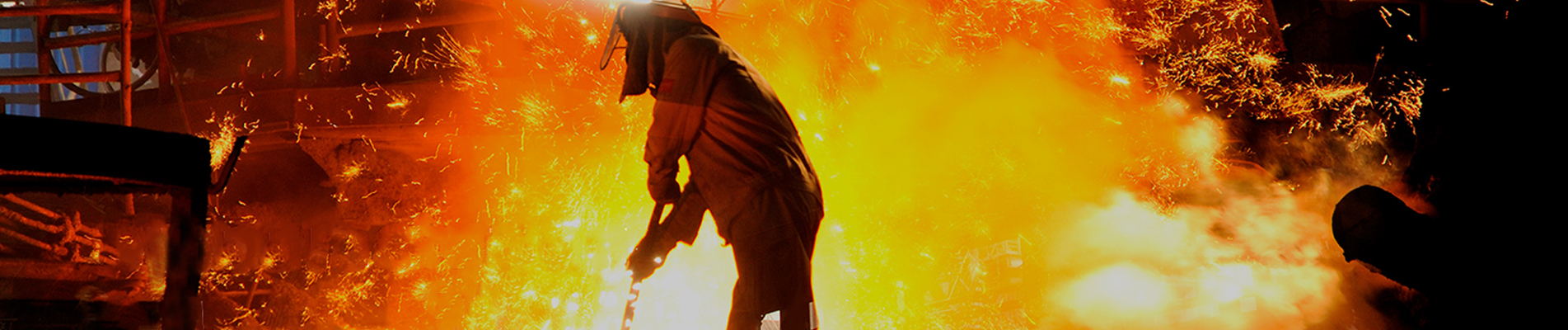
Inside a gas turbine exhaust silencer, the condition of the acoustic infill matters just as much as the steel casing, perforated facing and internal supports. The infill must stay in its intended position while exposed to heat, vibration, pressure changes and high-velocity exhaust flow. If the material settles, migrates or escapes through a damaged retaining surface, the silencer may no longer perform as originally intended.
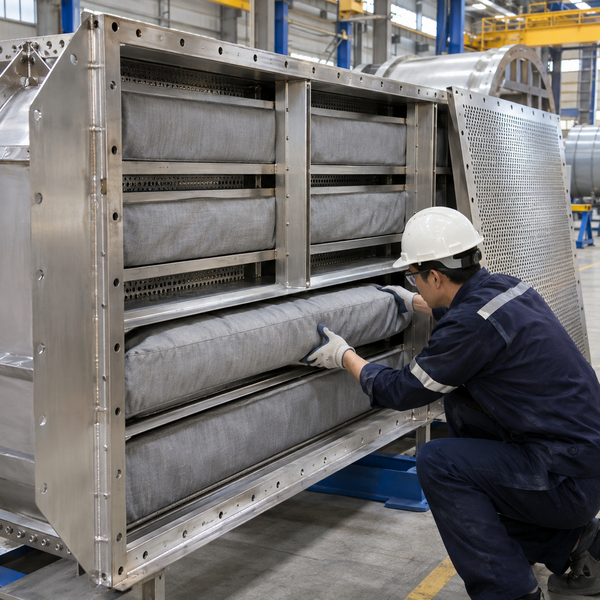
High-temperature acoustic pillows provide a contained and replaceable form of sound-absorbing infill for silencer baffles and splitter assemblies. Each pillow holds the selected fibrous material inside a sewn heat-resistant envelope. This allows the silencer manufacturer or maintenance contractor to install a controlled amount of acoustic material in each section of the baffle.
The construction can be adapted for new silencer production, scheduled maintenance or the replacement of worn original components.
BSTFLEX manufactures custom high-temperature acoustic pillows for gas turbine and industrial exhaust silencers.
What an acoustic pillow does inside an exhaust silencer
A gas turbine exhaust silencer normally uses perforated baffles or splitter elements to expose sound-absorbing material to the acoustic field while keeping the material outside the main exhaust stream.
The acoustic pillow is installed behind the perforated facing. Sound energy passes through the openings and enters the fibrous core. Friction within the fibre structure converts part of that acoustic energy into a small amount of heat, helping reduce the sound transmitted through the exhaust system.
The pillow also performs a mechanical function. It keeps the acoustic material together during packing, transportation, installation and service. Instead of placing loose fibre throughout a large baffle cavity, the manufacturer can divide the infill into separate, manageable sections.
This arrangement makes it easier to control the position and quantity of the infill. It also allows individual sections to be inspected and replaced without removing all the acoustic material from the silencer.
Why sewn acoustic pillows are used instead of loose infill
Loose acoustic fill can be difficult to distribute consistently in long or deep silencer baffles. Material may shift during transportation, become compressed at one end or leave an area with insufficient infill.
Vibration and gas movement can also cause gradual migration if the retaining system is not suited to the operating conditions. Once the material has moved away from its intended position, empty spaces can form inside the baffle.
A sewn acoustic pillow gives the infill a defined shape and boundary. Individual pillows can be manufactured to match the length, width and depth of each cavity. The fabric envelope helps contain the fibres, while internal divisions or reinforcement can be added when required by the baffle geometry.
The pillow design does not replace the need for a correctly engineered silencer. The perforated facing, internal supports, gas path, infill specification and installation method must still work together. The advantage of the pillow is that it provides a controlled way to package and position the selected acoustic material.
This construction is particularly useful during maintenance. Once the facing panel is removed, the maintenance team can inspect the baffle section by section. Damaged pillows can be replaced individually, while serviceable sections remain in place.
How a high-temperature acoustic pillow is constructed
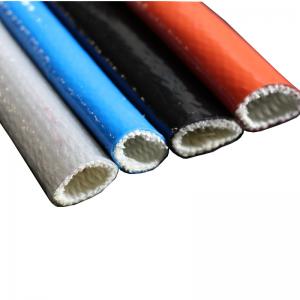
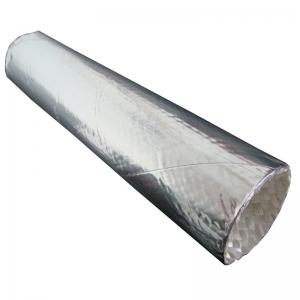
A typical exhaust silencer acoustic pillow consists of a heat-resistant outer envelope, fibrous acoustic filling, high-temperature sewing thread and, where necessary, stainless-steel mesh reinforcement.
The final construction should be based on the silencer design and actual operating conditions. Choosing every component separately without considering the complete assembly can produce a pillow that fits the drawing but does not perform reliably in service.
Outer fabric envelope
The outer envelope contains the acoustic filling and provides the first layer of resistance to handling damage and fibre movement.
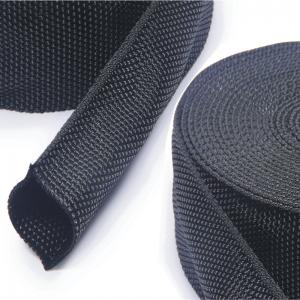
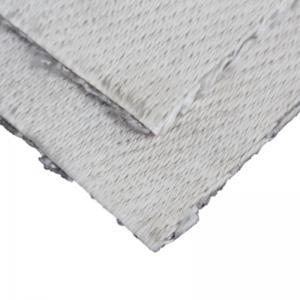
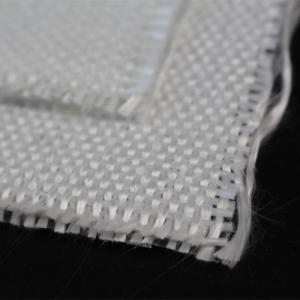
Woven fiberglass fabric, silica-based fabric and other heat-resistant textiles may be considered according to the required temperature range, gas exposure and mechanical conditions. The fabric weight, weave, surface treatment and permeability all influence the behaviour of the finished pillow.
The envelope must be flexible enough for installation but strong enough to hold the filling without opening at the seams. A fabric that is suitable for a stationary thermal cover is not automatically suitable for use inside an exhaust silencer. Gas movement, vibration and contact with the perforated facing must also be considered.
Acoustic filling
The core material is selected according to sound absorption requirements, operating temperature and dimensional stability.
Its fibre type, density and installed compression should follow the acoustic design of the silencer. Adding more filling does not automatically improve performance. Excessive compression can alter the structure of the material, while insufficient filling can leave gaps or allow the pillow to lose its intended shape.
The filling should be distributed evenly throughout the pillow. Long pillows may require internal divisions to prevent material from collecting at one end during transportation or vertical installation.
The specified core must also be compatible with the expected exhaust environment. Temperature is important, but it is not the only consideration. Moisture, oil contamination, chemical exposure and repeated thermal cycling can all influence material selection.
Stainless-steel mesh reinforcement
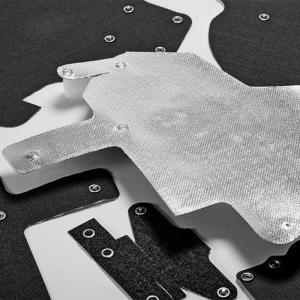
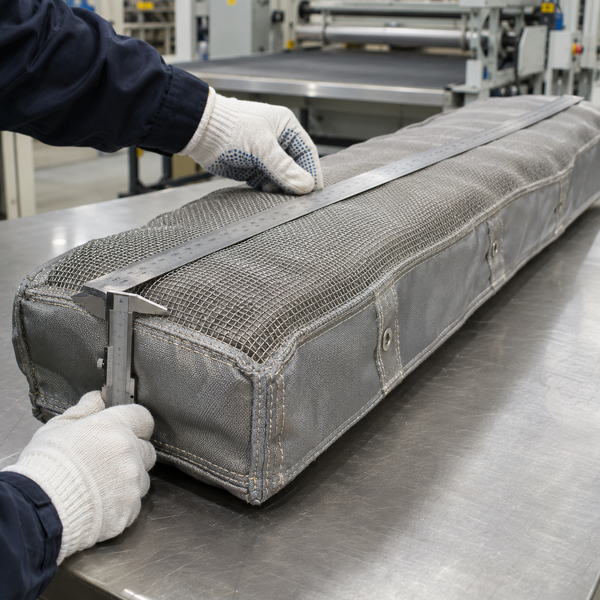
Stainless-steel knitted or woven mesh can be incorporated where the pillow requires additional resistance to abrasion, gas movement or repeated handling.
The reinforcement may cover the complete pillow or only the faces and edges most exposed to mechanical wear. Adding mesh without considering the installation can make the pillow unnecessarily rigid or difficult to fit through the available access opening.
Mesh type, wire diameter, opening size and coverage should be selected according to the perforated facing and the expected service conditions. Sharp mesh edges must be controlled so that they do not cut the textile envelope during handling or thermal movement.
High-temperature seams and thread
The seam is a working part of the acoustic pillow rather than a cosmetic detail.
Thread material, stitch construction, seam allowance and edge treatment must remain compatible with the selected fabric and expected temperature cycles. Corners and lifting areas deserve particular attention because they are often loaded when the pillow is installed or removed.
A strong outer fabric cannot compensate for an unsuitable thread or a poorly positioned seam. If a seam opens, the core material may become exposed even when the rest of the envelope remains in good condition.
Where possible, seams should be positioned away from areas of direct abrasion. Reinforcement may be added at corners, ends or handling points according to the shape of the baffle.
Information needed before manufacture
There is no useful universal size for every gas turbine exhaust silencer. Equipment with a similar duty may use different baffle dimensions, perforated panels, internal supports and access arrangements.
The following information should be reviewed before acoustic pillows are manufactured:
Clear internal dimensions of each baffle cavity.
Required pillow length, width and finished thickness.
Number and arrangement of pillows in each silencer section.
Normal operating temperature and possible short-duration temperature excursions.
Exhaust gas composition and possible moisture, oil or chemical exposure.
Expected gas velocity, vibration and pressure pulsation.
Design and condition of the perforated facing.
Position of internal supports, braces and panel joints.
Access opening dimensions and installation direction.
Required outer fabric, core material, mesh and sewing thread.
Identification, packing and spare-part requirements.
Drawings, photographs or an available reference sample.
For replacement projects, a used pillow can provide useful construction information when it is safe and practical to send one. However, the dimensions of a pillow removed after service should not be treated automatically as its original dimensions. The material may have compressed, stretched or changed shape.
Drawings and cavity measurements should therefore be supplied whenever possible. The original installation position should also be recorded because one silencer may contain several pillow sizes.
Common reasons for replacing acoustic pillows
Acoustic pillows should be inspected when the silencer is opened during a planned outage or when operating observations suggest that the acoustic system has changed.
Replacement may be necessary when the fabric envelope is torn, the seams have opened, the wire reinforcement is broken or the filling has settled. A pillow that has become permanently compressed may no longer fill its assigned cavity correctly.
Discolouration alone does not confirm failure. It can, however, help identify hot areas, gas leakage paths or sections requiring closer examination.
Visible fibre downstream of the baffle is a more serious warning sign. The complete retaining system should be checked, including the pillow envelope, seams, perforated facing and joints around the panel.
Replacing the pillow without repairing a damaged perforated plate may cause the same problem to appear again.
Moisture and process contamination also require attention. A contaminated core can change in weight, thickness and acoustic behaviour. The source of the contamination should be identified before new pillows are installed.
The condition of the surrounding steelwork should be checked at the same time. Distorted panels, loose fasteners or sharp internal edges can damage a new pillow soon after installation.
How to measure replacement acoustic pillows
Do not rely only on the external dimensions of a removed pillow. Begin by measuring the clear internal dimensions of the baffle cavity.
Check the cavity at several positions because heat exposure or mechanical damage may have caused distortion. Record any supports, bolts, braces or panel joints that reduce the available space.
The installation path is just as important as the final cavity size. A pillow may fit the internal space but still be impossible to install if the access opening is narrower or obstructed.
Measure the pillow length, width and thickness at several points. Record the seam location, mesh coverage, internal divisions and any tabs or fastening details. Photographs should include a ruler or other scale and clearly show the pillow’s original position.
If several apparently identical pillows are removed, compare them before choosing one as the reference sample. Differences may indicate separate sizes, uneven compression or previous replacement work.
For new silencer production or a major retrofit, a baffle drawing is preferable. It allows the pillow arrangement to be planned around supports, facing panel joints and installation clearances before manufacturing begins.
OEM and replacement pillow identification
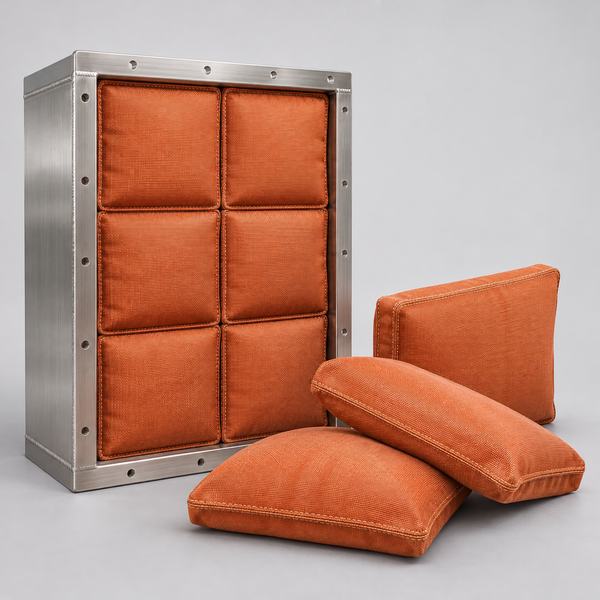
A large silencer may use many pillows that look similar but are not interchangeable. Clear identification reduces mistakes during installation and future maintenance.
Pillows can be grouped by baffle number, elevation, installation side or drawing reference. The identification method must remain suitable for the service environment and should not introduce unsuitable materials into the hot gas system.
Packing should follow the same sequence used for installation. When pillows are packed by baffle section or installation order, maintenance crews can work without repeatedly sorting components at the job site.
For repeat projects, maintaining an approved drawing and position list is more reliable than measuring another used sample during every outage.
What to include in an RFQ
A complete RFQ allows the manufacturer to review the construction without repeated requests for basic information.
The enquiry should include the equipment type, silencer manufacturer if known, cavity dimensions, required quantity, operating conditions and requested materials. State whether the requirement is for a new silencer, scheduled replacement, emergency repair or development of an alternative construction.
If the new pillows must match an existing specification, provide the complete material description. A trade name alone may not identify the exact fabric weight, weave, mesh construction or filling density used in the original assembly.
Useful RFQ documents include:
Silencer or baffle drawings.
A list of pillow sizes and quantities.
Photographs of the open baffle assembly.
Photographs of the removed pillows.
Normal and maximum operating conditions.
Required material specifications.
Details of the perforated facing.
Installation access dimensions.
Labelling and packing requirements.
Requested delivery schedule.
BSTFLEX can manufacture finished high-temperature acoustic pillows and supply the heat-resistant fabrics, stainless-steel mesh, insulation materials and related components used in custom assemblies.
Drawings, photographs, dimensions and sample details can be reviewed before the pillow construction is confirmed. Custom sizes, material combinations, reinforcement arrangements and packaging methods are available according to the project requirements.
For a quotation, send the available drawings, dimensions, operating information, required quantity and photographs to us.

 English
 Deutsch
 русский
 italiano
 español
 português
 Nederlands
 العربية
 日本語
 한국의
 Türkçe
 Polski
 Tiếng Việt
 slovenský
 Indonesia